


.svg)
.svg)
.svg)

The Evolution of Enterprise Security: Beyond Fragmented Access
Picture this: a global enterprise with 15,000 employees spread across 40 offices on four continents. Each employee carries an average of seven different credentials - building access cards, parking passes, cafeteria payment cards, gym memberships, VPN tokens, and multiple system logins. The IT department manages 23 separate access control systems that don't communicate with each other. When someone leaves the company, it takes an average of 47 days to fully revoke all their access points.
This isn't a hypothetical scenario. It's the reality for most large organizations, and it represents a fundamental failure in how we've approached enterprise security. The concept of one credential providing infinite possibilities sounds like marketing speak until you understand the chaos it's meant to replace. PayCloud's One Touch World platform addresses this fragmentation head-on, creating a unified ecosystem where a single digital credential unlocks buildings, authorizes payments, grants system access, and manages identity across every touchpoint an employee encounters.
The transformation happening in enterprise access isn't just about convenience, though that matters. It's about recognizing that fragmented systems create security gaps, operational inefficiencies, and employee frustration that compounds daily. When organizations consolidate around a unified credential architecture, they're not just simplifying workflows - they're fundamentally rethinking how identity and access should function in a connected workplace.
The Cost of Credential Fatigue in Modern Organizations
The numbers tell a stark story. Employees spend an estimated 11 hours annually just dealing with password resets and credential issues. Multiply that across a 10,000-person organization, and you're looking at 110,000 hours of lost productivity - roughly $2.5 million in wasted labor costs before you even factor in IT support overhead.
But credential fatigue extends beyond time loss. When employees manage dozens of access points, they inevitably take shortcuts. They write passwords on sticky notes. They share access cards. They prop open secured doors because badging in repeatedly feels tedious. Each workaround creates a security vulnerability that traditional access control systems can't detect because they operate in isolation.
The psychological burden matters too. Cognitive load research shows that managing multiple authentication systems creates measurable stress and reduces focus on primary job responsibilities. Employees aren't just annoyed by fragmented access - they're genuinely less effective because of it.
Why Traditional Access Control Systems are Failing
Legacy access control was designed for a simpler era. One building, one badge reader, one database. The system worked reasonably well when employees showed up to the same office every day and stayed with companies for decades. Neither assumption holds anymore.
Hybrid work demolished the single-location model. Employees now need access to headquarters on Tuesday, a regional office on Thursday, and a co-working space on Friday. Traditional systems handle this through complex provisioning workflows that create delays and administrative overhead. Worse, they often fail silently - an employee arrives at an unfamiliar office only to discover their badge doesn't work there.
The technology stack has also fractured. Physical access runs on one system, logical access on another, and payment systems on a third. These silos create blind spots where security teams can't see the full picture of who has access to what. An employee terminated from one system might retain active credentials in another for weeks or months.
The Architecture of PayCloud's One Touch Ecosystem
PayCloud's approach starts with a fundamental architectural decision: credentials belong on the device people already carry everywhere - their smartphone. By provisioning encrypted digital keys directly to devices and storing them in Apple's Secure Element, the platform eliminates physical credential overhead while dramatically improving security.
The Secure Element isn't just another storage location. It's a dedicated hardware chip designed specifically for cryptographic operations and credential storage. Unlike software-based solutions that can be compromised through malware or operating system vulnerabilities, the Secure Element maintains isolation from the device's main processor. Even if someone gains root access to a phone, they cannot extract credentials from the Secure Element.
This hardware-backed security enables capabilities that weren't previously possible. Credentials can be provisioned remotely, revoked instantly, and updated without requiring employees to visit an IT desk. The same credential that unlocks a building door can authorize a cafeteria purchase and grant access to sensitive systems - all with cryptographic verification that prevents spoofing or replay attacks.
Universal Interoperability Across Hardware and Software
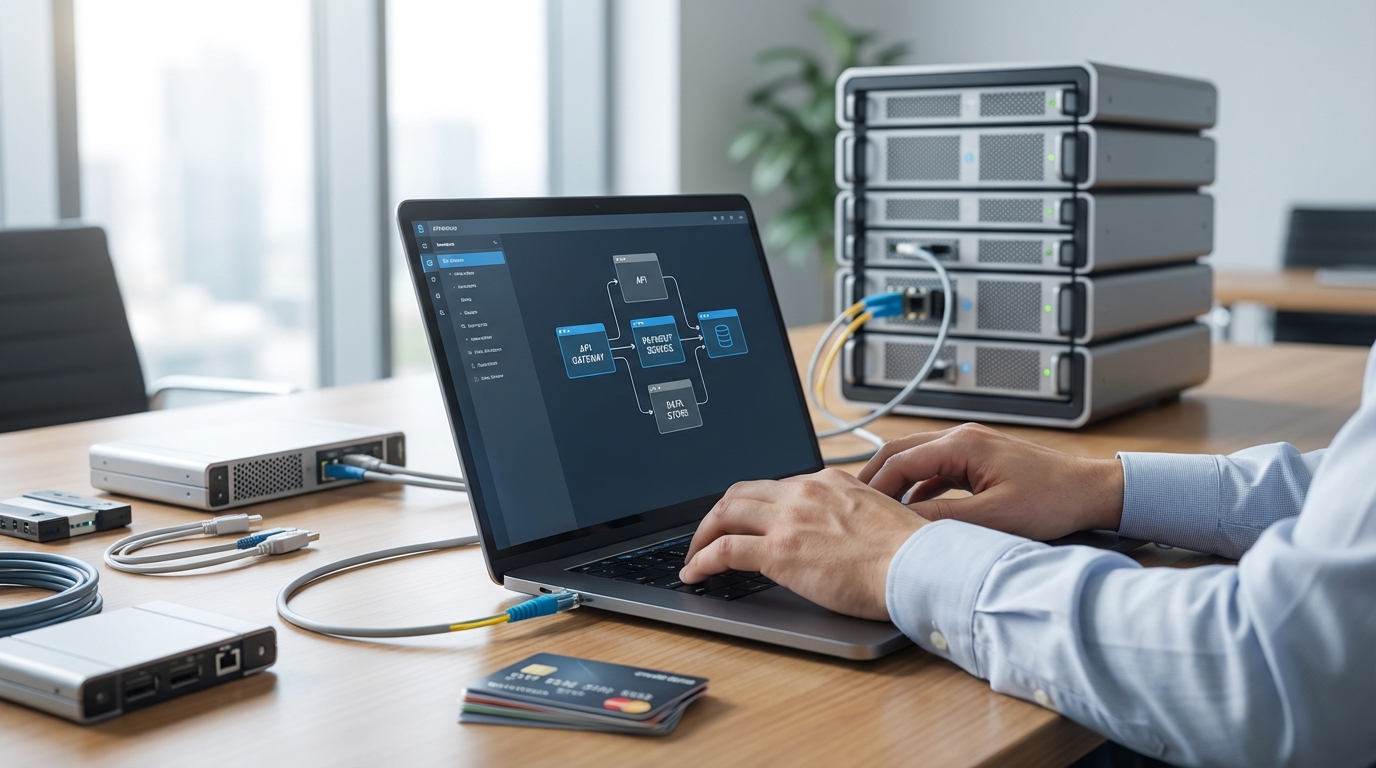
The platform's API-first architecture connects to existing enterprise systems rather than replacing them. Access control databases, time-and-attendance platforms, property management systems, and HR platforms all integrate through standardized interfaces. This matters because organizations have invested millions in their current infrastructure - they need evolution, not revolution.
Integration extends to the physical layer as well. The One Touch World ecosystem works with existing NFC readers, which means organizations don't need to rip out their current door hardware. A phased rollout becomes possible: start with headquarters, prove the concept, then expand to regional offices as confidence builds.
Corporate campuses can replace physical badges with Secure Element credentials that unlock buildings, parking facilities, and restricted areas. The credentials integrate with visitor management workflows, allowing temporary access grants that automatically expire. Universities issue student IDs combining meal plans, library access, dormitory entry, and event ticketing - all on a single digital credential that persists throughout the student's enrollment.
Leveraging Biometrics and Blockchain for Immutable Identity
Biometric authentication adds a layer that physical credentials simply cannot match. A stolen badge works for anyone who picks it up. A digital credential protected by Face ID or Touch ID only works for its authorized owner. This fundamentally changes the security equation.
The biometric check happens locally on the device - the actual biometric data never leaves the phone or transmits over the network. This addresses privacy concerns while maintaining security benefits. The system verifies that the authorized person is present without creating a centralized database of fingerprints or facial scans.
For audit and compliance purposes, the platform maintains immutable records of credential usage. Every access event generates a cryptographically signed log entry that cannot be altered retroactively. When regulators or auditors need to verify who accessed what and when, the evidence trail is complete and tamper-proof.
Streamlining Operations Through Unified Authentication
Operational efficiency gains compound quickly when authentication consolidates. Consider the simple act of a new employee starting work. In a fragmented environment, HR initiates the hire, then separate requests go to facilities for building access, IT for system credentials, finance for expense card provisioning, and parking management for garage access. Each request enters a different queue with different approval workflows and different completion timelines.
With unified authentication, employee onboarding triggers a single workflow that provisions all necessary credentials based on role and location. The new hire receives everything they need on their first day - often before they even arrive at the office. The same logic applies to role changes, department transfers, and temporary access grants for projects or visitors.
Accelerating Employee Onboarding and Offboarding
The onboarding improvements are significant, but offboarding is where unified systems truly shine from a security perspective. When an employee departs, a single action revokes all access simultaneously. There's no waiting for separate teams to process separate requests. There's no gap where a terminated employee retains access to sensitive systems.
Current industry data shows corporate adoption of digital credentials at approximately 45%, with projections exceeding 85% by 2030 as hybrid work normalizes and security requirements tighten. Organizations making the transition now gain competitive advantage in talent acquisition - employees increasingly expect modern workplace technology.
The administrative burden reduction translates directly to cost savings. Security teams spend less time managing credential lifecycles and more time on strategic initiatives. HR departments eliminate manual coordination across multiple systems. IT help desks see fewer access-related tickets.
Bridging Physical Security and Digital Assets
The convergence of physical and logical access creates security insights that neither system provides alone. When an employee badges into a building in New York at 9 AM, then attempts to access sensitive systems from an IP address in Singapore at 9:15 AM, the unified platform flags the impossibility. Traditional siloed systems would process each event independently, missing the obvious fraud indicator.
This convergence extends to space utilization analytics. Organizations gain visibility into how facilities are actually used - which conference rooms sit empty, which floors are overcrowded, which access points see the most traffic. The data informs real estate decisions, security staffing, and emergency planning.
Enhancing the Employee Experience with Frictionless Entry
The employee experience dimension often gets overlooked in security discussions, but it matters enormously for adoption and compliance. Systems that frustrate users get circumvented. Systems that feel natural get embraced.
Hotels have already proven this principle. Properties using PayCloud's platform provision encrypted digital keys directly to guest devices, enabling remote check-in that eliminates front desk queues. Guests appreciate the convenience; hotels appreciate the reduced plastic card waste and operational efficiency. The same dynamic applies to corporate environments.
The Psychological Impact of Simplified Workflows
Friction accumulates in ways that aren't immediately obvious. Each additional authentication step, each credential swap, each system login creates a small cognitive interruption. Individually these interruptions seem trivial. Collectively they fragment attention and reduce deep work capacity.
When employees carry one credential that handles everything, they stop thinking about access entirely. They focus on their actual work instead of the mechanics of moving through their day. This isn't just about saving seconds at door readers - it's about removing the mental overhead that fragmented systems impose.
The trust signal matters too. When an organization invests in modern, user-friendly systems, employees interpret that as respect for their time and experience. When they struggle with outdated, frustrating technology, they draw the opposite conclusion.
Future-Proofing the Workplace with One Touch Scalability
Technology investments need to accommodate change, and workplace dynamics are changing faster than ever. The shift to hybrid work happened in months rather than years. Return-to-office policies continue evolving. Global expansion creates new facility requirements. Mergers and acquisitions bring entirely new employee populations.
A unified credential platform handles these changes through configuration rather than replacement. Adding a new office location means extending the existing system, not deploying a parallel one. Acquiring another company means migrating their employees onto the existing platform, not maintaining two separate infrastructures indefinitely.
Adapting to Hybrid Work and Global Office Hubs
Hybrid work creates access patterns that traditional systems handle poorly. An employee might visit headquarters twice a week, work from home three days, and occasionally drop into regional offices or co-working spaces. Each location needs to recognize their credential instantly without pre-provisioning or manual requests.
The One Touch World platform supports this fluidity natively. Credentials work across the entire organizational footprint. Employees don't need to think about which badge works where or request access before traveling to an unfamiliar office. The system simply works, everywhere.
Global deployments introduce additional complexity around local regulations, language requirements, and integration with regional systems. The platform's architecture accommodates these variations while maintaining centralized visibility and control.
Data-Driven Insights for Optimized Space Management
Every credential interaction generates data. Aggregated and analyzed, this data reveals patterns that inform strategic decisions. Which floors see peak utilization? When do conference rooms sit empty? How do access patterns shift between seasons or around major company events?
Real estate represents one of the largest expense categories for most enterprises. Even small improvements in space utilization translate to significant cost savings. Organizations using access data to optimize their footprint consistently find opportunities to consolidate, repurpose, or eliminate underutilized space.
The data also supports emergency preparedness. Knowing exactly who is in a building at any moment enables faster evacuation verification and more effective emergency response. Traditional badge systems provide this capability in theory, but fragmented implementations often leave gaps.
Securing the Future: The New Standard for Global Enterprise Access
The trajectory is clear. Organizations that continue managing fragmented credential systems will face increasing security risks, operational costs, and employee frustration. Those that consolidate around unified platforms will gain efficiency, security, and competitive advantage in attracting talent.
PayCloud's One Touch World represents where enterprise access is heading - a single credential providing infinite possibilities across physical and digital environments. The technology exists today. The integration pathways are proven. The question isn't whether unified credentials will become standard, but which organizations will lead the transition and which will struggle to catch up.
For enterprises ready to explore what unified credential management could mean for their operations, PayCloud Innovations offers secure, scalable solutions designed for the complexity of modern global organizations. Discover the platform to see how one credential can truly unlock infinite possibilities across your enterprise.




.svg)