

Why Organizations Choose PayCloud


Hardware-Based Security
Credentials live in the Secure Element — the same chip-level protection that secures Apple Pay and Android devices — ensuring identity data never leaves the device in unencrypted form.

Single Credential, Multiple Environments
One digital credential unlocks office doors, logs into systems, authenticates transactions, and verifies identity across all enterprise environments.

Compliance-Ready Infrastructure
Meet NIST, FIPS, SOC 2, and industry-specific compliance requirements with built-in audit trails, access logs, and credential lifecycle management.
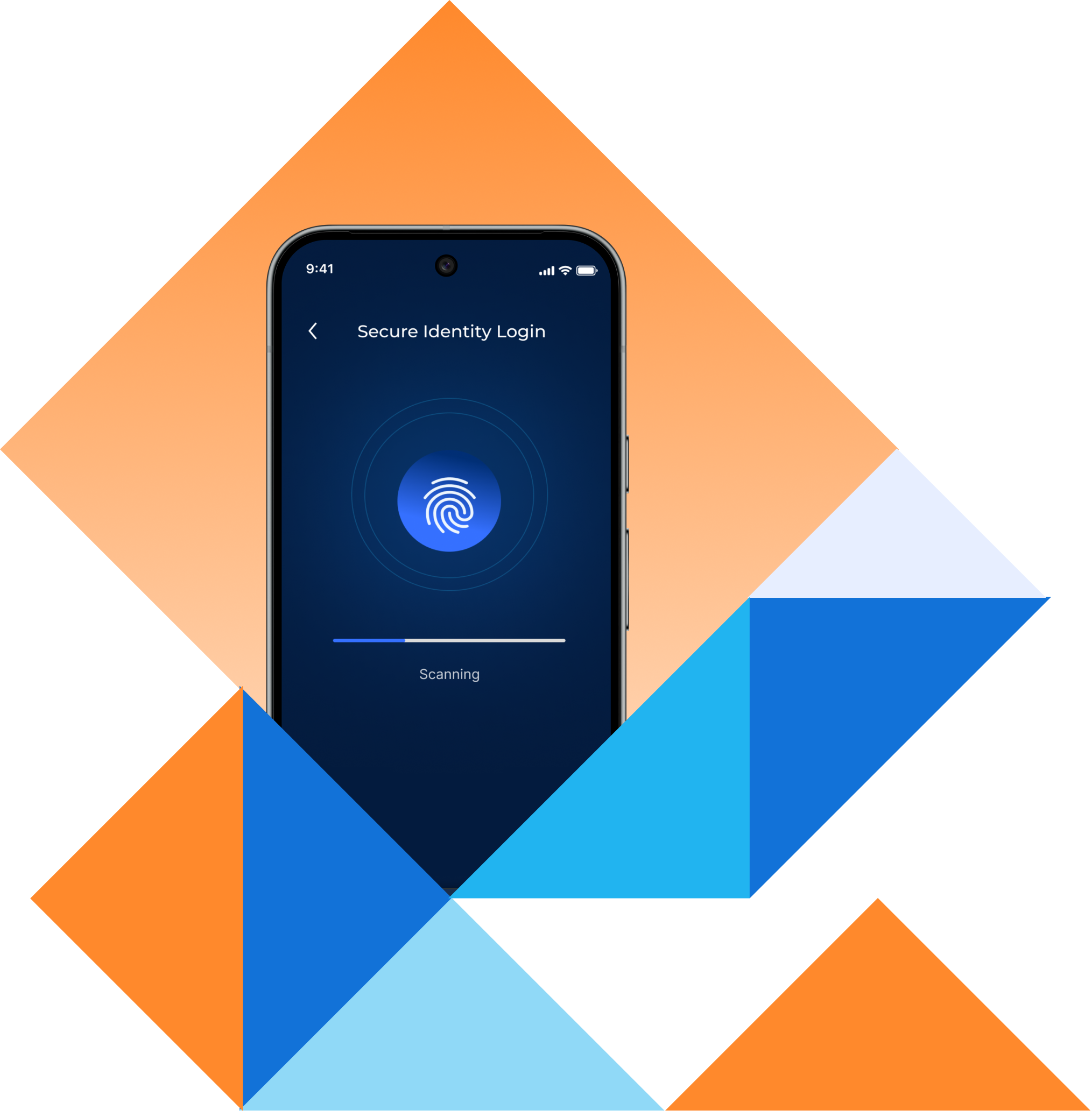
Biometric Authentication






Benefits for Businesses

Enhanced Security Posture
Hardware-backed biometrics eliminate password-related breaches, credential sharing, and social engineering attacks.

Improved User Experience
Employees tap to enter buildings, log into applications, and authenticate sensitive actions — all with a single credential and biometric confirmation.

Operational Efficiency
Eliminate badge printing, distribution, replacement, and deactivation workflows — reducing administrative overhead and improving onboarding speed.

Audit & Compliance Readiness
Real-time access logs, credential usage analytics support regulatory audits and security assessments.

Scalable Infrastructure
Add new buildings, systems, and use cases without replacing core infrastructure — using API-driven integrations and modular architecture.

Future-Ready Identity
Support emerging use cases like secure document signing, healthcare record access — all from a unified credential foundation.
Frequently Asked Questions
How does biometric authentication improve security over traditional badges?


Physical badges can be lost, stolen, shared, or cloned. Biometric credentials live in the Secure Element—a hardware chip that never releases data in unencrypted form. Authentication requires both device possession and biometric verification, making unauthorized access nearly impossible. Credentials can't be duplicated, and revocation happens instantly across all access points.
How do conditional access policies work in practice?
Define rules based on role, location, time, credential type, and risk level. A contractor might access the loading dock between 6 AM and 6 PM but nowhere else. An executive accesses all floors anytime. An employee working remotely might need elevated authentication to access sensitive systems. The platform enforces these policies automatically without manual oversight.
Can we integrate with our existing access control systems and door hardware?
Yes. The platform connects to existing access control systems through standard REST APIs. Door controllers, turnstiles, elevator systems, and parking gates integrate without hardware replacement.
Do we maintain audit trails for compliance and security investigations?
Yes. Every access attempt — successful or denied — creates a timestamped log entry with user identity, location, credential type, and authentication method. Real-time reporting supports regulatory audits, security assessments, and incident investigations.
What happens when employees change roles or leave the organization?
Credential lifecycle automation ties directly to HR systems and identity platforms. When roles change, access permissions update automatically. When employees leave, credentials revoke instantly across all doors, systems, and services. No badge collection, no manual deactivation across multiple systems—one HR status change cascades throughout the access infrastructure.
Can we extend this beyond physical access to system authentication?
Absolutely. The same credential that unlocks office doors also logs users into applications, authenticates sensitive transactions, and verifies identity for document signing. Employees use one biometric credential across physical environments—eliminating passwords while strengthening security and improving user experience.
Our Trusted Partners & Collaborators
















.svg)