

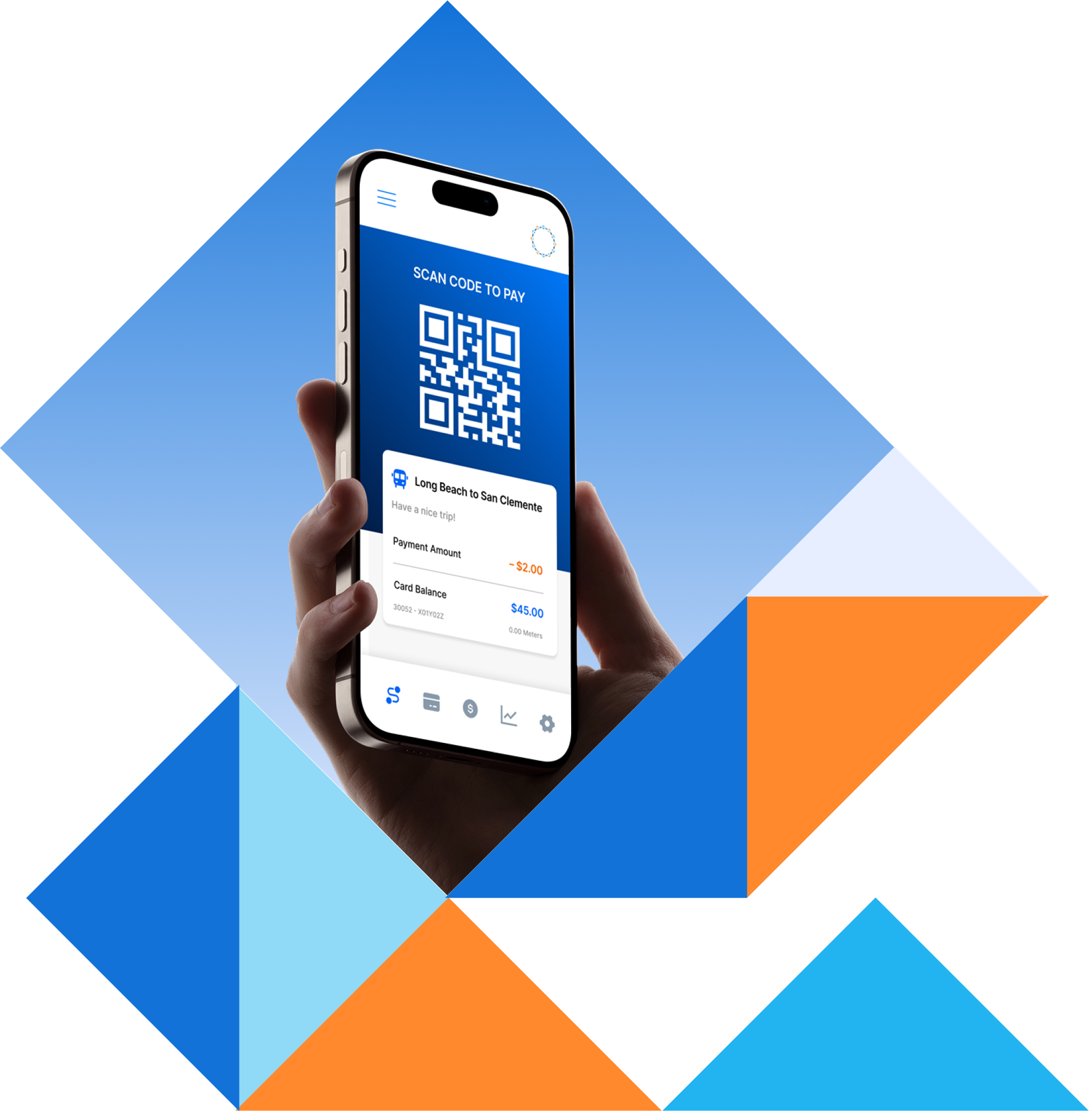
Why Transit Agencies Choose PayCloud


Universal Accessibility
Accept payments from any EMV contactless card or mobile wallet — no app downloads, no fare cards, no registration required.

Reduced Infrastructure Costs
For specific use cases, standard Android devices can be used as certified validators, eliminating the need for expensive proprietary hardware and reducing per-unit costs by up to 70%.

Real-Time Operational Insights
Access live ridership data, fare capping analytics, revenue tracking, and route performance metrics through cloud-based dashboards.
Hardware-Independent Validation






Benefits for Businesses

Faster Boarding Times
Contactless validation completes in under 300 milliseconds — reducing dwell times, improving schedule adherence, and enhancing passenger flow.

Lower Fare Evasion
Digital validation create audit trails that discourage fare evasion while supporting proof-of-payment enforcement.

Data-Driven Planning
Analyze ridership patterns by route, time, fare type, and demographics to optimize service planning, resource allocation, and capital investments.

Improved Rider Experience
Eliminate the complexity of fare products, zone maps, and transfer rules. Riders simply tap and ride — the system calculates the best fare automatically.

Reduced Operating Costs
Eliminate fare card production, distribution, retail partnerships, and customer service inquiries related to card balances and replacements.

Inclusive Payment Options
Support unbanked and underbanked populations through cash-to-card programs, while offering digital-first riders the convenience they expect.
Frequently Asked Questions
How do open-loop payments reduce infrastructure costs for transit agencies?


For specific use cases, standard Android devices can replace proprietary fare validators that cost thousands per unit, reducing hardware expenses by up to 70%. By leveraging Android (HCE) or Apple Secure Element, physical transit cards are eliminated — removing card issuance, printing, distribution, management, replacement, and waiting costs.
What happens when validators lose network connectivity?
Validators process transactions offline using stored fare rules and approved card lists. When connectivity returns, transactions synchronize automatically with the central system. This ensures riders can board even in tunnels, rural routes, or during network outages—without compromising revenue collection or security.
Can we maintain closed-loop fare cards alongside open-loop payments?
Yes. The platform accepts both bank-issued contactless cards and transit-specific fare cards on the same validators. Riders choose their preferred payment method. Agencies maintain control over subsidy programs, pass products, and special fare categories while offering universal payment acceptance.
How do we gain operational insights from payment data?
Real-time dashboards show ridership by route, time, fare type, and demographics. Analyze boarding patterns, transfer behavior, peak usage periods, and revenue trends. Use this data to optimize service planning, adjust frequency on high-demand routes, allocate resources efficiently, and justify capital investments with usage evidence.
How does fare capping work without requiring rider registration?
This approach applies in closed-loop or token-based account models. The system tracks tap using secure tokens—not personal information. When the same token appears multiple times within a fare period, the platform calculates cumulative fares and automatically applies daily, weekly, or monthly caps. Riders receive best-fare guarantees without creating accounts or registering cards.
Does the platform support multi-modal integration across different transit services?
Yes. Riders use one payment method across bus, rail, ferry, and paratransit services. The platform applies unified fare rules, automatic transfer discounts, and seamless mode switching. This eliminates confusion about fare products and zone boundaries while encouraging multi-modal trips that increase overall ridership.
Our Trusted Partners & Collaborators
















.svg)