


.svg)
.svg)
.svg)

The Evolution of Connectivity: Moving Beyond Legacy Silos
A hotel guest walks through the lobby, phone in pocket, and their room door unlocks automatically. Three blocks away, a transit rider taps the same device to board a bus while their parking meter extends itself based on real-time traffic data. This isn't science fiction from a decade ago - it's happening now, and it's powered by platforms that finally understand what "connected" actually means.
The journey from hotel keys to smart cities represents more than technological progress. It reflects a fundamental shift in how enterprises think about identity, access, and transactions. For years, businesses operated in silos: your hotel key worked at the hotel, your transit card worked on trains, and your payment credentials lived somewhere else entirely. Each system required separate infrastructure, separate credentials, and separate user experiences.
PayCloud has positioned itself at the center of this transformation, building the infrastructure that enables hyperconnected enterprises to unify these fragmented experiences. Their approach treats digital identity as foundational rather than an afterthought, enabling organizations to build interconnected services that share data, credentials, and context across previously isolated systems.
The real breakthrough isn't any single technology. It's the architectural decision to treat every touchpoint - from a door lock to a parking meter to a point-of-sale terminal - as nodes in a unified network rather than endpoints of separate systems.
From Physical Access to Digital Identities
Physical credentials have dominated enterprise access for decades. Plastic key cards, RFID badges, magnetic stripe passes - each represented a single-purpose identity token that couldn't communicate with other systems. Your corporate badge opened office doors, but you couldn't pay for lunch in the cafeteria. Your hotel key accessed your room, but you couldn't charge a spa appointment.
Digital identity changes this equation entirely. When credentials are stored in a secure element on a smartphone rather than on a piece of plastic, they can include context, permissions, and payment capabilities. PayCloud's One Touch World Hospitality solution demonstrates this principle by replacing traditional hotel keys with Secure Element-based digital room credentials issued through mobile wallets. Guests receive instant, contactless access, while hotels eliminate the operational overhead of demagnetized cards and front-desk congestion.
The shift matters because digital identities can be dynamic. A physical badge grants the same access whether you're a new hire or a ten-year employee. A digital credential can adjust permissions based on role, time, location, and dozens of other factors - all managed through centralized APIs rather than manual reprogramming.
The Limitations of Fragmented Enterprise Ecosystems
Most enterprises today run dozens of disconnected systems that should be integrated. The access control platform is unaware of the HR system's termination records. The payment processor can't verify employee status for discount eligibility. The parking management system operates independently from the building's occupancy sensors.
This fragmentation creates real costs. IT teams maintain multiple vendor relationships, security protocols, and integration points. Users juggle multiple credentials and apps. Data that could improve operations sits trapped in isolated databases.
A 2024 enterprise survey found that organizations with more than 10,000 employees typically manage over 40 separate identity and access systems. Each system requires its own compliance documentation, security audits, and maintenance cycles. The administrative burden alone often exceeds the cost of the underlying technology.
PayCloud's architecture addresses this by providing unified APIs that connect disparate systems through a common data layer. Instead of point-to-point integrations that multiply complexity, enterprises connect each system once to a central platform that handles routing, authentication, and data transformation.
PayCloud Architecture: The Backbone of Hyperconnectivity
Building infrastructure for hyperconnected enterprises requires solving problems that traditional payment and access platforms never anticipated. When a single credential needs to unlock doors, authorize payments, track loyalty points, and verify identity across multiple organizations, the underlying architecture must handle complexity that would overwhelm conventional systems.
PayCloud's platform addresses this challenge through three core principles: unified credential management, real-time processing at the edge, and security that follows the data rather than residing solely at network boundaries.
Unified APIs for Seamless Cross-Platform Integration
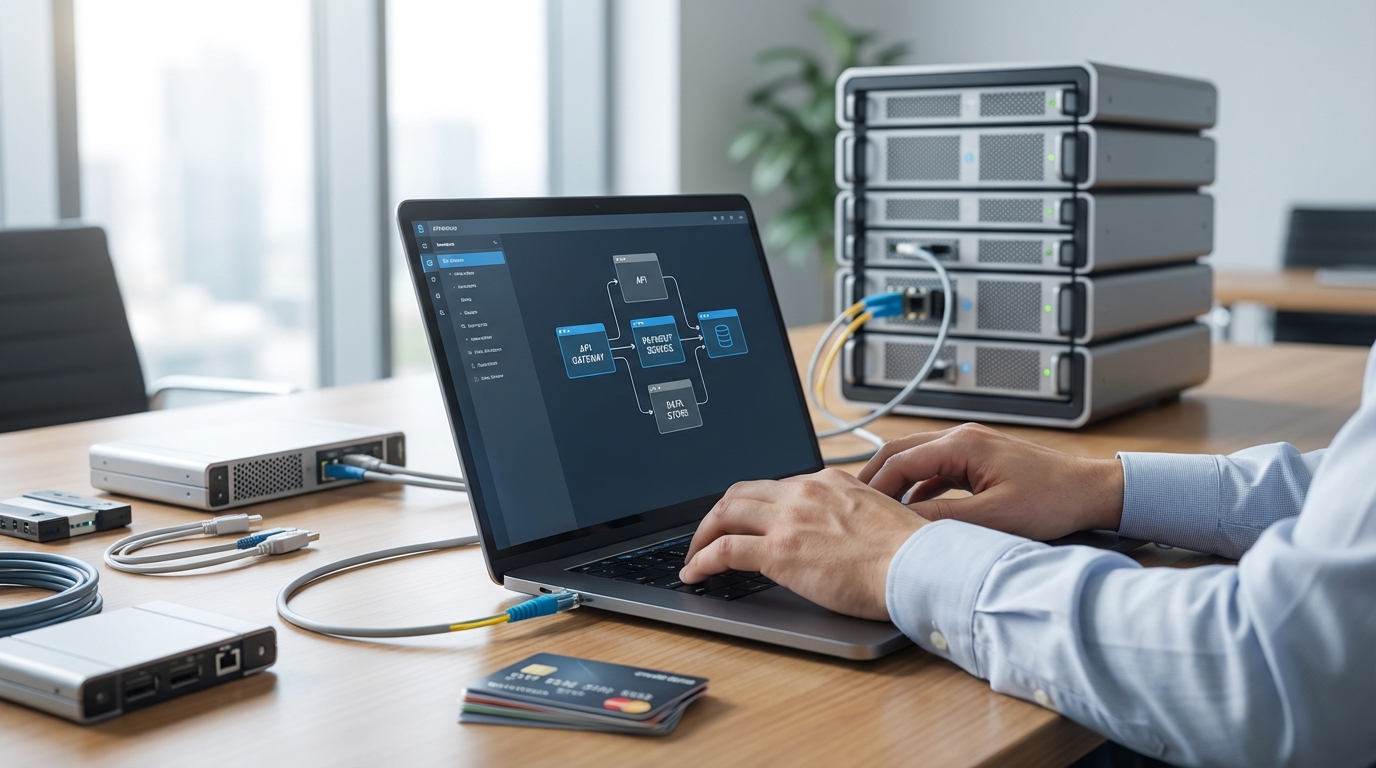
The technical foundation of hyperconnectivity is API design. PayCloud's APIs integrate with existing enterprise systems, including card management platforms, access control databases, and loyalty programs, via standardized interfaces. This matters because enterprises rarely start from scratch - they need to integrate new capabilities with decades of existing infrastructure.
The API-first approach enables organizations to connect PayCloud's provisioning and card services directly to banking cores, issuer processors, or legacy platforms without custom development. Real-time provisioning ensures credentials are activated within seconds of a request, whether the request originates from a hotel reservation system, a corporate HR platform, or a municipal services portal.
White-label wallet platforms extend this flexibility to customer-facing applications. Financial institutions and enterprises can brand and customize digital wallet applications powered by PayCloud's secure infrastructure while maintaining control over user experience, feature sets, and branding.
Real-Time Data Processing and Edge Computing
Hyperconnected systems generate massive data volumes. A smart city deployment might process millions of transactions daily across parking meters, transit turnstiles, access points, and payment terminals. Traditional centralized architectures can't handle this load while meeting the latency requirements of modern applications.
Edge computing pushes processing closer to where transactions occur. When a commuter taps their phone at a transit gate, the authorization decision is processed locally rather than requiring a round-trip to a distant data center. This reduces latency from seconds to milliseconds while improving reliability; the system continues to operate even when network connectivity is intermittent.
PayCloud's architecture distributes intelligence across the network while maintaining centralized visibility and control. Local nodes make time-sensitive decisions autonomously and then sync with central systems for reconciliation, analytics, and policy updates. This hybrid approach delivers the responsiveness of edge computing with the governance capabilities enterprises require.
Revolutionizing Hospitality through Smart Access and Payments
The hospitality industry has become a proving ground for hyperconnected enterprise concepts. Hotels manage complex ecosystems of guest services, staff access, vendor relationships, and payment processing - all of which benefit from unified digital infrastructure.
The Frictionless Guest Journey: Mobile Keys and Invisible Check-ins
Traditional hotel check-in involves waiting in line, presenting identification, signing forms, and receiving a plastic key card that may or may not work reliably. Mobile keys eliminate most of these friction points.
PayCloud's hospitality solution issues digital room credentials directly to guest devices before arrival. Guests bypass the front desk entirely, proceeding directly to their rooms, where their phones unlock the door automatically. The credential lives in the device's Secure Element, providing hardware-grade security that exceeds traditional magnetic stripe cards.
The benefits extend beyond convenience. Hotels reduce front desk staffing requirements during peak periods. Guests avoid the frustration of demagnetized cards that require replacement. Environmental impact decreases as properties eliminate millions of plastic keys annually.
Corporate travel programs particularly benefit from this approach. Business travelers can access credentials for their preferred hotel chains, conference venues, and transportation services through a single corporate wallet, simplifying expense tracking and improving the travel experience.
Monetizing the Experience with Integrated POS Systems
Access credentials that also function as payment instruments create new revenue opportunities throughout the guest journey. When a hotel key can charge purchases to a room account, guests spend more freely at on-property restaurants, spas, and retail outlets.
PayCloud's integrated POS capabilities transform NFC-enabled devices into secure payment terminals without dedicated hardware. Staff can process transactions anywhere on the property using smartphones or tablets, eliminating the need for fixed checkout locations.
Data integration matters as much as payment processing. When access and payment systems share a common platform, properties gain visibility into guest behavior patterns that inform service improvements, staffing decisions, and marketing strategies. A resort might discover that guests who use the spa on their first day spend 40% more on food and beverage throughout their stay - insight that drives targeted promotions and service sequencing.
Scaling to the Urban Grid: PayCloud in Smart City Infrastructure
The same principles that transform hospitality operations apply at municipal scale. Cities face the challenge of managing diverse services - transit, parking, utilities, recreation facilities - that have historically operated as independent fiefdoms with separate payment systems and user accounts.
Smart Parking and Intelligent Transit Solutions
Urban parking represents one of the most fragmented payment landscapes. Drivers encounter different systems for street meters, garage entry, permit validation, and violation payment. Each system requires its own app, account, or payment method.
Unified platforms consolidate these interactions. A driver's phone becomes a universal parking credential that works across meters, garages, and permit zones throughout a metropolitan area. Payment is calculated automatically based on actual usage, rather than requiring advance estimates. Dynamic pricing adjusts rates based on demand, encouraging turnover in high-traffic areas while directing drivers to available spaces.
Transit integration extends this convenience to multi-modal journeys. The same credential that pays for parking also covers bus fares, subway rides, and bike-share rentals. Fare capping ensures riders never pay more than a daily or weekly maximum, regardless of how many trips they take or which modes they use.
PayCloud's transit solutions focus on reducing costs while improving rider experience. Modern fare collection systems eliminate cash handling, reduce equipment maintenance, and provide real-time ridership data that informs service planning.
Centralizing Municipal Services on a Single Ledger
Beyond transportation, cities provide dozens of services that involve payments, permits, and identity verification. Recreation center memberships, library cards, parking permits, utility accounts - each traditionally requires separate enrollment and management.
A unified municipal identity platform allows residents to access all city services through a single credential. The same digital ID that unlocks a community center door can also verify residency for permit applications, check out library materials, and pay utility bills.
For city administrators, centralization simplifies operations and improves data quality. Instead of maintaining separate databases that may contain conflicting information, departments work from a common identity layer that ensures consistency. Fraud detection improves when systems can cross-reference activity patterns across services.
Securing the Hyperconnected Frontier
Connectivity creates vulnerability. Every new integration point represents a potential attack surface. Every shared credential increases the impact of a single compromise. Security architecture must evolve alongside connectivity to maintain trust.
Zero-Trust Security Protocols for IoT Devices
Traditional network security assumed that devices inside the perimeter could be trusted. This model fails completely in hyperconnected environments where thousands of IoT devices - door locks, payment terminals, sensors, meters - connect to enterprise networks.
Zero-trust architecture assumes every device and every request might be compromised. Authentication happens continuously rather than once at connection time. Credentials carry limited permissions that restrict lateral movement if a device is compromised.
PayCloud's infrastructure leverages Apple Secure Element technology, providing hardware-grade protection for sensitive credentials. The Secure Element isolates cryptographic operations from the device's main processor, preventing malware from accessing payment credentials or access tokens even if the device itself is compromised.
Pre-certified applets for payment cards, corporate badges, transit passes, hotel keys, and loyalty credentials meet Common Criteria, EMVCo, and industry-specific security standards. Customers deploy immediately without waiting for custom development or security evaluations.
Compliance and Data Privacy in a Global Environment
Hyperconnected enterprises often operate across multiple jurisdictions with distinct regulatory requirements. European operations must comply with GDPR. California residents have CCPA protections. Financial services face PCI DSS requirements. Healthcare integrations trigger HIPAA obligations.
PayCloud's platform addresses compliance complexity through configurable data-handling policies. Data residency controls ensure information stays within required geographic boundaries. Consent management tracks user permissions across integrated services.
The Future of the Autonomous Enterprise
The trajectory from hotel keys to smart cities points toward something larger: enterprises that operate with minimal human intervention, where systems communicate, coordinate, and optimize autonomously based on shared data and unified identity infrastructure.
This isn't about replacing human decision-making. It's about eliminating the friction and delay that currently separates intention from action. When a guest books a hotel room, their credentials should provisioned automatically. When an employee changes roles, their access permissions should update instantly. When a city detects traffic congestion, parking prices and transit schedules should adjust in real time.
PayCloud's architecture provides the foundation for this autonomous future by treating identity, access, and payment as unified capabilities rather than separate systems. The platform can support real-time AI-driven transformation of customer engagement, behavior-based loyalty programs, and operational automation that responds to evolving conditions.
Organizations exploring this transformation should start with use cases that deliver immediate value while building toward broader integration. Hotel key replacement, transit fare modernization, and corporate badge consolidation each provide standalone benefits while establishing the infrastructure for future expansion.
For enterprises ready to move beyond legacy silos, PayCloud Innovations offers secure, scalable fintech solutions that make hyperconnectivity practical. Their platform handles the complexity of multi-system integration, allowing organizations to focus on the experiences they want to create rather than the infrastructure required to deliver them.




.svg)