


.svg)
.svg)
.svg)
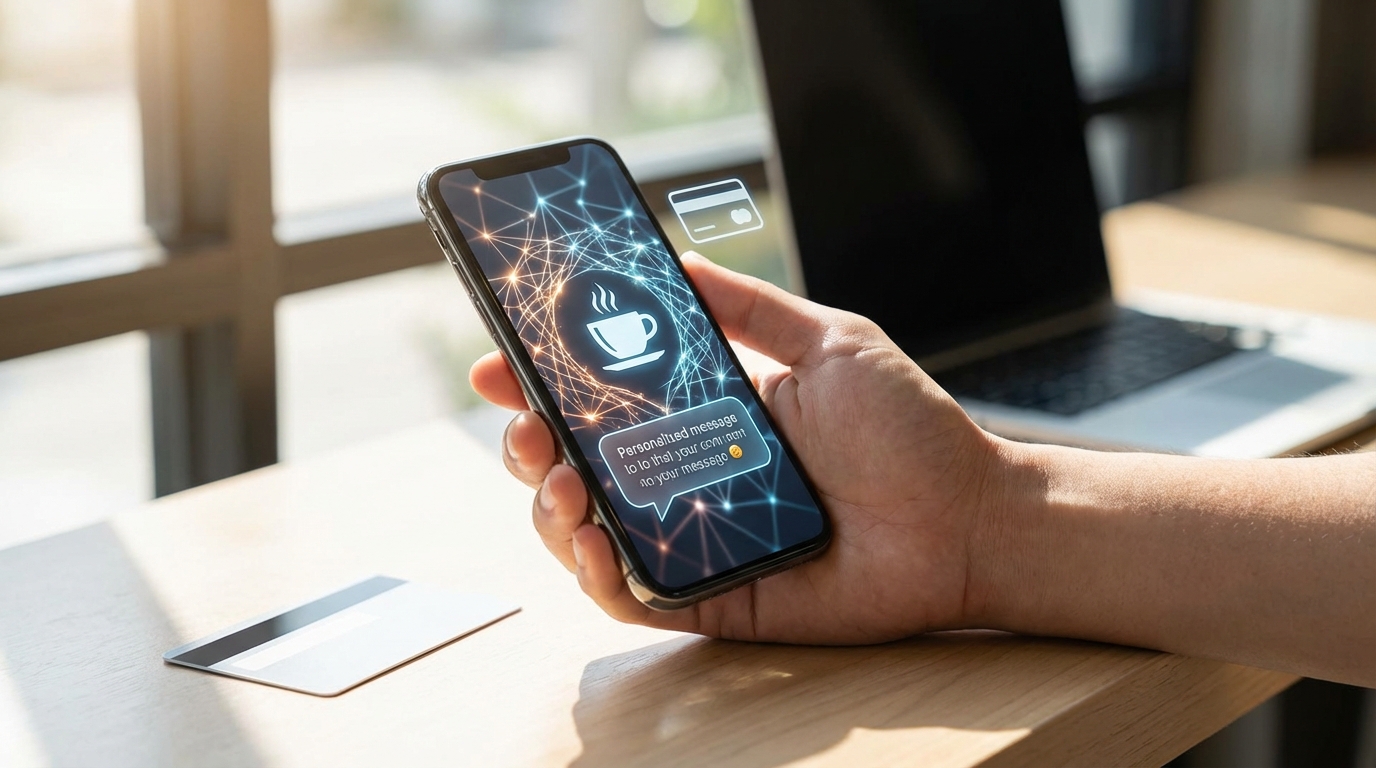
The traditional, points-based loyalty program is reaching the end of its usefulness, and 2026 is the inflection point where brands either evolve or get left behind. Customers do not want another plastic card or one-dimensional app; they want brands to understand them, anticipate their needs, and deliver value in the exact moment it matters. The shift from static earn-and-burn mechanics to AI- and data-driven personalization is not a passing trend—it is a structural reset in how businesses design, measure, and sustain customer relationships.
Why legacy loyalty is losing relevance
Most consumers belong to many loyalty programs but meaningfully engage with only a subset, revealing a large gap between enrollment and actual participation. Studies consistently show that consumers belong to an average of around 14–19 programs but are active in only 6–9 of them, underscoring the extent of dormant memberships and wasted marketing investment. The core issue is not that customers dislike rewards; it is that generic, irrelevant, and slow-moving programs do not earn ongoing attention.
Traditional points-based constructs treat every customer essentially the same: spend a certain amount, earn a fixed number of points, regardless of tenure, advocacy, or context. This transactional, one-size-fits-all logic drives a race to the bottom on discounts and point multipliers, eroding margins without delivering meaningful differentiation. On top of that, complex redemption rules, expirations, and blackout constraints generate friction and negative brand sentiment, especially when customers feel they have “earned” value they cannot easily use.
From transactional to emotional loyalty
Emotionally connected customers exhibit dramatically higher value, with research indicating they can generate more than triple the lifetime value of purely satisfied but unengaged counterparts. These customers purchase more often, remain loyal through minor service failures, and recommend brands at significantly higher rates. Emotional loyalty is built when customers experience recognition, relevance, and respect—not just discounts or point bonuses.
Context is central to this shift. A weekday morning regular at a café expects consistent, frictionless service and might appreciate a surprise reward on their usual order, whereas an occasional weekend visitor may respond more to discovery, new product recommendations, or social engagement. Modern architectures move beyond demographic segments to dynamic, individual profiles that evolve with each interaction, allowing brands to recognize patterns such as routines, preferences, and responsiveness to different types of offers in near real time.
Real-time AI as the new loyalty engine
The data and compute infrastructure underpinning loyalty has matured to enable decisions in milliseconds instead of hours or days. Instead of batch-processing events overnight, modern platforms interpret behavioral signals, recency, frequency, monetary value, and contextual cues as they occur, orchestrating responses that feel intuitive rather than scripted. The brands that are winning loyalty today are not simply offering richer reward tables; they are orchestrating experiences that make customers feel known across the lifecycle.
PayCloud Innovations is architected for this new reality, delivering an API-first, modular platform that unifies wallet management, payments, loyalty, and real-time decisioning into a cohesive ecosystem. Our framework supports enterprise partners across sectors by enabling them to configure campaigns, trigger partner-network benefits, and surface individualized offers across channels through a single, secure orchestration layer. Rather than locking brands into a single points schema, PayCloud’s design supports flexible value constructs—points, cashback, experiential rewards, and partner benefits—mapped to transaction types, customer attributes, and behavioral events.
Predictive analytics and proactive engagement
Predictive models now allow brands to move from reacting to past purchases to anticipating future intent. By analyzing signals such as browsing patterns, visit frequency, product-category interest, and cross-channel behavior, AI can estimate the likelihood of specific outcomes—purchase, upgrade, churn, or advocacy—before they happen. For example, repeated category browsing, price comparisons, and store locator searches around a specific product line often indicate impending purchase decisions, creating a window for precisely timed, relevant engagement.
This predictive layer also powers churn prevention. Models can flag customers whose activity signals early disengagement long before they completely stop buying, enabling targeted, personalized reactivation efforts instead of generic win-back blasts. Within PayCloud’s ecosystem, these analytical capabilities are designed to plug into our loyalty, payment, and wallet modules so that enterprise clients can use their own data models or partner models to drive next-best-action logic at scale, while maintaining control over brand rules and thresholds.
Automating next-best-action without losing authenticity
Next-best-action (NBA) engines evaluate each interaction to determine the most appropriate response: a benefit, a personalized recommendation, a service gesture, or sometimes simply a confirmation that no action is needed. These engines consider factors such as customer value, context, historical responsiveness, and current journey stage, and can adjust decisions in milliseconds as new data comes in. When done well, customers experience timely, relevant touchpoints—welcome sequences, post-purchase content, replenishment nudges, and service updates—that feel tailored rather than automated.
The risk is over-automation that feels robotic or intrusive. The strategic advantage lies in using AI to determine the “what” and “when,” while allowing the brand to define the “how”—tone, boundaries, and experience standards. PayCloud’s approach is to expose orchestration and decisioning through configurable APIs and rules, so that enterprises can embed NBA capabilities into their native channels and voice while leveraging shared infrastructure for speed, compliance, and scalability.
Contextual engagement and real-time relevance
Context is what transforms incentives from noise into value. The same offer can feel irrelevant or perfectly timed depending on time of day, lifecycle stage, location, and recent activity. Loyalty programs that do not incorporate contextual signals—such as recent searches, device type, or service interactions—inevitably over-communicate in moments when customers are not in-market and under-communicate when they are ready to act. By orchestrating engagement around contextual “moments,” brands can increase conversion while reducing message fatigue.
Location-aware micro-moments
Location adds an additional dimension to contextual loyalty. Geo-fencing allows brands to trigger engagement when customers enter specific zones such as shopping districts, venues, or airports, while respecting frequency caps and preferences. For example, a regular coffee customer passing near a store during their usual morning window is a strong signal for a micro-moment offer that feels helpful rather than intrusive. More advanced implementations combine location with visit history, time of day, and propensity models to tell whether the right action is a discount, an experiential invite, or no message at all.
PayCloud’s platform is built to integrate with partner location and event data streams through APIs, enabling merchants and venues to design geo-aware experiences without rebuilding their core payments stack. This allows use cases like venue offers triggered on entry, proximity-based upgrades, and neighborhood retail campaigns that connect payment credentials, identity, and loyalty in a single experience path.
Dynamic incentives and responsive value
Dynamic, rules-based incentives allow brands to factor in inventory, demand, customer value, and competitive conditions when determining offers. Instead of blanket promotions, systems can tailor value by customer segment or even individual, prioritizing deeper incentives for high-lifetime-value or at-risk customers and more discovery-oriented offers for newer segments. Limited-time or real-time benefits—such as upgrades during off-peak periods or bonus rewards when capacity is available—create urgency that is grounded in operational reality rather than artificial scarcity.
PayCloud’s loyalty and payments orchestration is designed to support these dynamic constructs by linking customer scoring, campaign rules, and transaction processing, so value decisions happen in line with the payment event itself. This helps ensure that incentives are both financeable and measurable, tying promotional spend directly to incremental outcomes rather than generic engagement metrics.
Omnichannel fluidity and zero-friction experiences
Customers move seamlessly between digital and physical channels, and they expect their identity, balances, and benefits to move with them. Loyalty platforms that operate in silos—separate logins, inconsistent balances, delayed updates—create friction that erodes trust and reduces participation. Real-time, omnichannel synchronization is no longer optional; it is a core requirement for credible loyalty experiences in 2026.
PayCloud’s modular architecture is built to sit across bank, processor, and merchant environments, unifying identity and payment credentials wherever the customer interacts. Through capabilities such as Apple Secure Element and Trusted Service Manager services, certified SoftPOS, branded card programs, and Treasury-as-a-Service, PayCloud enables partners to connect loyalty value directly to secure payment and access experiences across mobile wallets, physical cards, kiosks, and in-app journeys. This reduces the need for multiple disjointed systems while preserving each brand’s ability to design its own front-end experience.
Generative AI as a communication layer
Generative AI now enables brands to move far beyond static templates toward individualized messaging that reflects each customer’s history, preferences, and current context. Content can adapt in real time: subject lines optimized for personal open patterns, product descriptions emphasizing attributes each customer cares about, and service messages that adjust tone based on past sentiment or channel behavior. This allows high-volume programs to retain a sense of human nuance without requiring impractical manual authoring at scale.
Within a PayCloud-enabled ecosystem, generative capabilities can be layered on top of the unified data and decisioning modules to power outbound and in-app communications that reference live balances, upcoming benefits, and payment options while adhering to brand guidelines. The result is not just more messages, but more meaningful messages—communications that help customers navigate benefits, discover relevant experiences, and understand the value they are receiving from the relationship.
Data ethics, privacy, and trust as differentiators
As personalization grows more powerful, customer sensitivity to data use and privacy grows in parallel. Many consumers now change brands more quickly than in previous years, and a significant share describe loyalty programs as generic or uninspiring when they do not see clear value for the data they share. At the same time, research shows that loyalty participants who feel “close” to a brand are far more likely to increase their spending, underscoring the link between trust and revenue.
Leading programs are moving beyond one-time consent toward an ongoing, transparent dialogue about data: what is collected, how it is used, and what the customer receives in return. Techniques such as consent management portals, granular preference controls, and clear explanations of how personalization works allow customers to feel in control. Privacy-preserving technologies, including on-device processing and federated learning, are increasingly important for brands looking to comply with evolving regulations while sustaining sophisticated AI use cases.
PayCloud’s role as a fintech infrastructure provider is to support these trust requirements at the platform level—through strong security, compliant credential management, and architectures that allow enterprise clients to respect regional regulations and customer preferences without sacrificing real-time capabilities. Our emphasis on secure element, TSM, and payment orchestration aligns naturally with a privacy-first posture in loyalty, tying identity and value to robust, regulated rails rather than opaque tracking mechanisms.
Building a future-ready loyalty strategy
The loyalty programs that are succeeding in 2026 share several common traits: they prioritize relevance over raw reward value, they operate on real-time decisioning infrastructure, they are accessible and consistent across channels, and they are explicit about data usage and consent. These characteristics will remain foundational as new interfaces, devices, and payment methods continue to evolve.
For enterprises, the practical path forward begins with an honest audit of engagement versus enrollment: where customers drop off, how long it takes to earn a meaningful benefit, and where friction still exists in redemption or recognition. From there, investments in unified data, identity, and real-time orchestration pave the way for more advanced capabilities like predictive models, NBA engines, and location-aware experiences. Crucially, AI should be framed as an enabler of better experiences rather than a mechanism for more aggressive targeting; customers consistently reward authenticity and usefulness over purely promotional interactions.
PayCloud Innovations is purpose-built to support this evolution, providing secure, scalable infrastructure that connects payments, loyalty, identity, and analytics into a cohesive ecosystem for modern engagement. By leveraging our Apple SE/TSM-as-a-Service, SoftPOS, branded card, Treasury-as-a-Service, and loyalty exchange capabilities, brands can design and deploy real-time, personalized experiences that move beyond the limitations of traditional points programs toward durable, emotionally anchored customer relationships.





.svg)