


.svg)
.svg)
.svg)

The Evolution of Financial Transactions and the Need for Hardware-Level Security
Every time you tap your phone at a coffee shop, a complex security dance happens in milliseconds. Your payment credentials, biometric data, and cryptographic keys all work together to authorize a transaction that would have seemed like science fiction twenty years ago. But here's what most people don't realize: the security protecting that tap isn't just software running on your phone's main processor. It's happening inside a tiny, physically isolated chip that even Apple's own iOS can't directly access.
The mobile payment market hit $88.5 billion in 2024 and is projected to reach $587.5 billion by 2030, representing a 38% compound annual growth rate. This explosive growth has attracted sophisticated attackers who've evolved beyond simple phishing schemes to target the fundamental architecture of payment systems. Traditional software-based encryption, while still valuable, has proven vulnerable to memory injection attacks, side-channel exploits, and malware that can intercept credentials before encryption even occurs.
Apple's Secure Element represents a fundamental shift in how we think about payment security. Rather than relying solely on software barriers, this approach creates physical isolation between sensitive operations and everything else on your device. The strategy is becoming an industry standard because it addresses threats that software alone cannot counter. Financial institutions processing trillions in transactions annually have recognized that hardware-bound security isn't optional anymore: it's the baseline expectation for any serious payment infrastructure.
Shifting from Software Encryption to Isolated Hardware Architecture
Software encryption works by scrambling data using mathematical algorithms. It's effective against many threats, but it has an inherent weakness: the encryption keys must exist somewhere in the device's memory, even if only briefly. Sophisticated attackers have developed techniques to capture these keys during that vulnerable moment, extracting credentials that should have been protected.
Hardware security modules solve this problem by performing cryptographic operations inside a physically separate chip. The keys never leave this isolated environment. Even if an attacker gains complete control over the main operating system, they cannot extract the secrets stored in the Secure Element because there's no physical pathway to do so.
Apple introduced the Secure Element with iPhone 6 in 2014 as the foundation for Apple Pay. This chip, separate from the main processor, stores payment credentials with bank-grade encryption. For a decade, Apple maintained exclusive control over this component, restricting access to its own services. That changed in August 2024 when Apple announced the NFC & SE Platform for iOS 18.1, opening Secure Element access to third-party developers for the first time.
How Apple Secure Enclave Redefines the Trust Model in Future Payments
Traditional payment security relied on a chain of trust that extended from your bank to the payment network to the merchant's terminal. Each link in this chain represented a potential vulnerability. The Secure Enclave approach fundamentally changes this model by creating a hardware root of trust that exists entirely on your device.
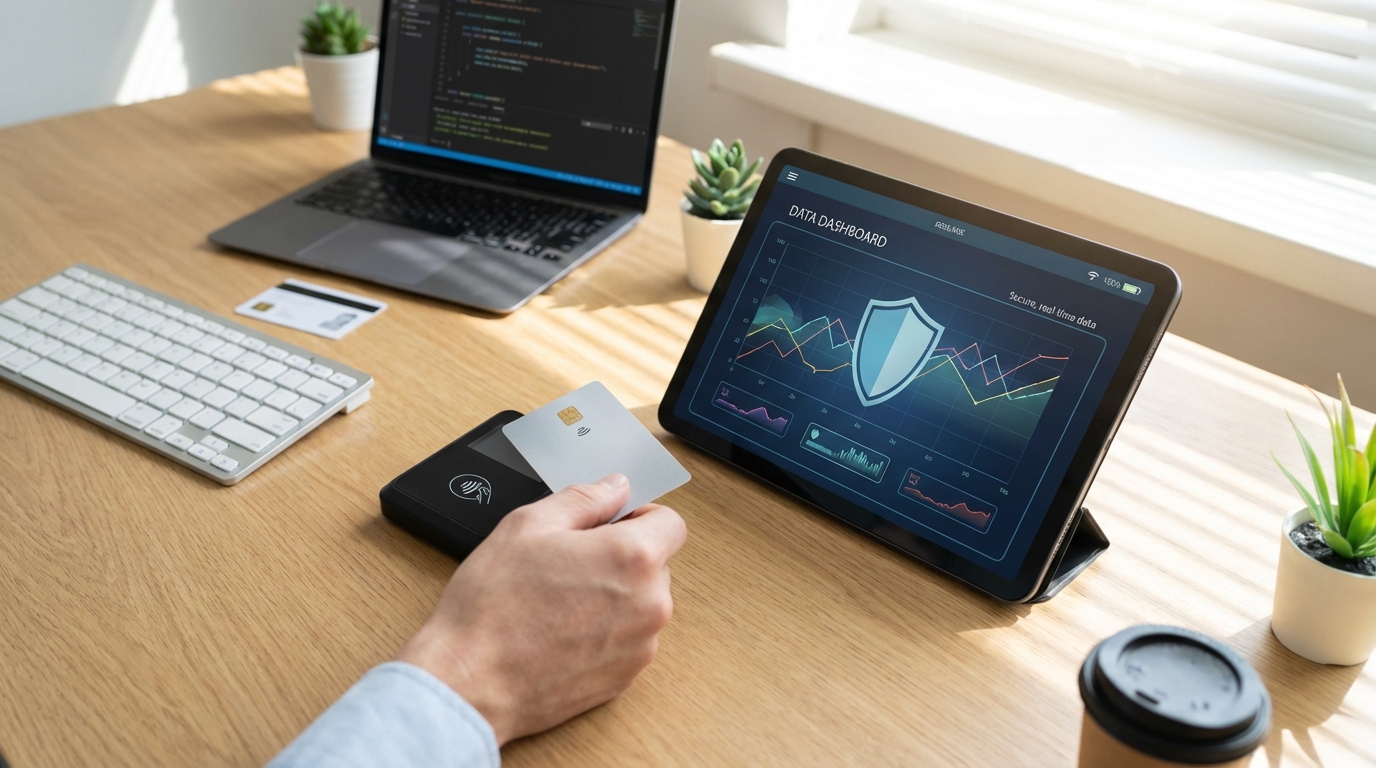
When you authorize a payment with Face ID or Touch ID, your biometric data never leaves the Secure Enclave. The system doesn't send your fingerprint or face scan to Apple, your bank, or anyone else. Instead, the Secure Enclave performs the comparison locally and simply confirms whether the biometric matched. This means there's no central database of biometric data to breach, no transmission to intercept.
Apple Pay now processes $8.7 trillion in transactions annually and maintains 57% of the U.S. mobile wallet market. The platform reaches 650 million users globally, with approximately 85% of U.S. retailers accepting Apple Pay. This massive infrastructure demonstrates that hardware-isolated security can scale to handle real-world transaction volumes without sacrificing speed or convenience.
Anatomy of the Apple Secure Enclave Security Framework
Understanding how the Secure Enclave actually works reveals why it's become the model for modern payment security. This isn't just marketing terminology: it's a specific technical architecture with measurable security properties that financial institutions can audit and verify.
The Secure Enclave operates as a separate computer within your device. It has its own processor, memory, and encrypted storage, all physically isolated from the main system. When your iPhone boots up, the Secure Enclave boots independently with its own secure boot chain. Even Apple cannot extract the unique cryptographic keys generated during device manufacturing.
Isolated Key Management and Cryptographic Operations
Every Secure Enclave contains a unique identifier (UID) fused into the silicon during manufacturing. This UID is never recorded by Apple and cannot be read by any software, even Apple's own firmware. All cryptographic keys derived from this UID are therefore unique to your specific device and cannot be recreated or cloned.
When you add a credit card to Apple Pay, the actual card number isn't stored on your device. Instead, the Secure Enclave generates a Device Account Number: a unique token that represents your card for that specific device. This token is useless on any other device, meaning a breach of your phone's storage wouldn't compromise your actual card credentials.
Credential provisioning follows a strict security protocol. When users add credentials to iOS apps, the application requests applet installation from Apple servers. Only applets that pass Apple's security evaluation receive a digital signature and hosting on Apple servers. The developer's Trusted Service Manager then personalizes the applet instance with credential-specific data transmitted through encrypted channels. Credential data never traverses unprotected networks, and encryption keys unique to each device prevent cloning or unauthorized duplication.
The Role of Biometric Data in Securing Local and Remote Transactions
Biometric authentication adds a layer that passwords simply cannot match. You can steal a password, but you cannot steal someone's fingerprint or face geometry remotely. The Secure Enclave stores biometric templates in an encrypted format that cannot be reverse-engineered to recreate the original biometric data.
When you authenticate with Touch ID or Face ID, the sensor captures your biometric and the Secure Enclave compares it against the stored template. This comparison happens entirely within the isolated hardware. The result: a simple yes or no that authorizes the transaction. No biometric data ever leaves the Secure Enclave, not even to Apple's servers.
This architecture protects against both remote attacks and physical device theft. An attacker who steals your phone cannot extract your biometric templates because they're encrypted with keys that exist only within the Secure Enclave. Even sophisticated forensic tools that can read iPhone storage cannot decrypt this data without the hardware keys.
The Apple Secure Enclave Strategy: Creating a Global Standard
Apple's decision to open Secure Element access to third-party developers marks a strategic shift with industry-wide implications. This wasn't a voluntary decision: the European Commission began challenging Apple's exclusive control over NFC payments in 2020, arguing it limited competition and prevented banks from creating alternative wallet solutions. Facing potential fines, Apple adopted a global approach to resolve regulatory concerns.
On October 28, 2024, Apple released iOS 18.1, transforming the mobile credential market by allowing third-party developers unprecedented access to the iPhone's Secure Element and NFC platform beyond Apple Wallet. This change unlocks direct, secure, and branded digital experiences for financial institutions, enterprises, and technology providers.
Integration with Apple Pay and Third-Party Financial APIs
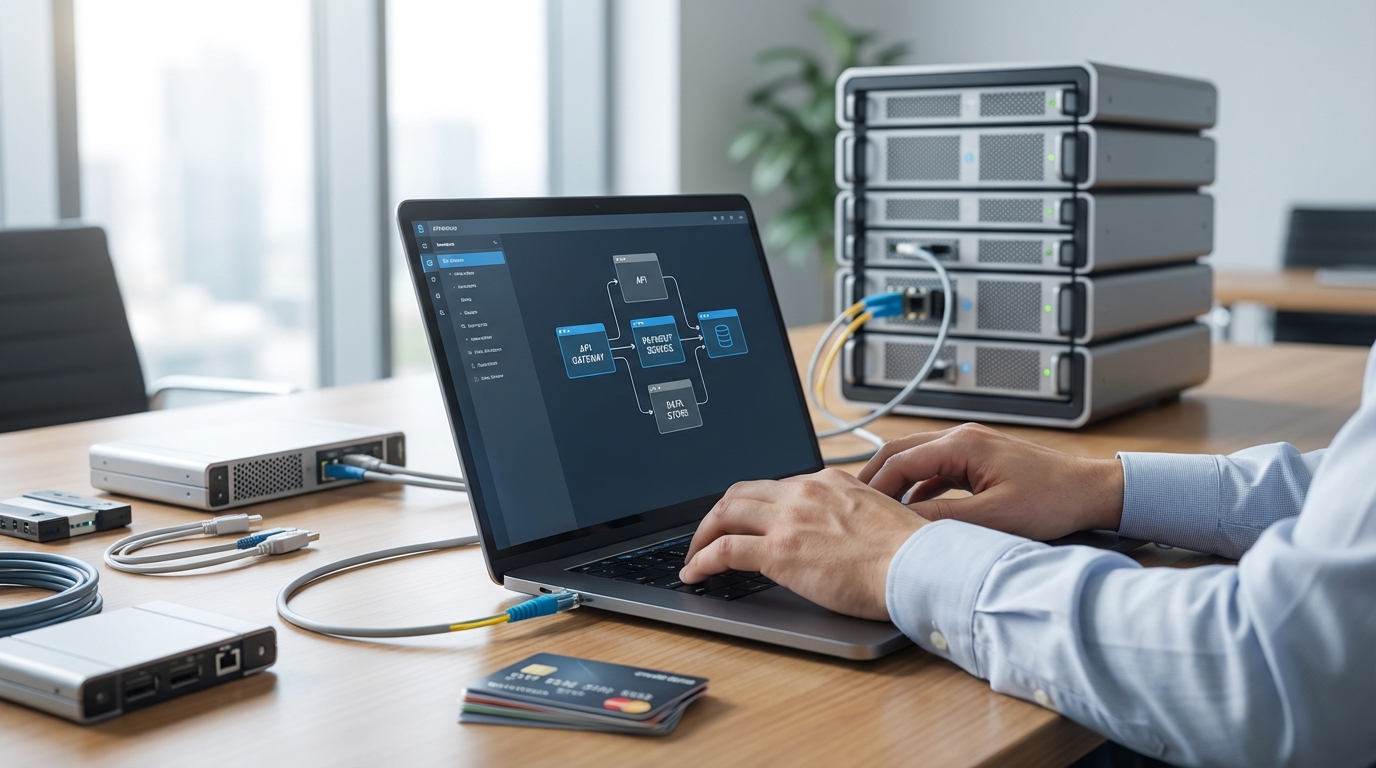
The new NFC & SE Platform enables financial institutions to deploy their own branded payment experiences while leveraging Apple's security infrastructure. Banks can now offer proprietary wallet applications that tap into the same hardware security protecting Apple Pay, but with their own user interfaces and feature sets.
This creates opportunities for differentiation that weren't previously possible. A bank might offer loyalty program integration, spending analytics, or specialized business features within their own app, all backed by Secure Element security. The benefit is clear: Apple Pay's 57% U.S. market share and global reach of 650 million users are now accessible to enterprises for payment cards, badges, tickets, and more via custom apps.
Implementation requires partnership with a Trusted Service Manager who handles the technical complexity of Secure Element provisioning. PayCloud Innovations and similar TSM providers offer the infrastructure to deploy applets, manage credentials, and maintain compliance with EMVCo, Common Criteria, and PCI DSS requirements.
Why Competitors are Adopting Similar TEE (Trusted Execution Environment) Models
Google Pay serves 520 million users worldwide but holds only 26% of the U.S. market. Android devices have long offered Trusted Execution Environment capabilities, and Google has been expanding these features to match Apple's security positioning. The competitive pressure is driving both platforms toward increasingly sophisticated hardware security.
Samsung's Knox platform, Qualcomm's Secure Processing Unit, and ARM's TrustZone all represent variations on the same fundamental concept: isolating sensitive operations in hardware that software cannot compromise. The industry consensus is clear: hardware-bound security is no longer a premium feature but a baseline requirement.
Financial institutions evaluating mobile payment strategies now expect TEE capabilities as a prerequisite. Any platform that cannot offer hardware-isolated credential storage is effectively disqualified from serious consideration for payment applications.
Mitigating Modern Threats through Hardware-Bound Identity
The threat landscape for payment systems has evolved dramatically. Attackers no longer focus solely on intercepting transactions: they target the identity systems that authorize those transactions. Hardware-bound identity provides defenses against attack vectors that software security cannot address.
Preventing Side-Channel Attacks and Memory Injection
Side-channel attacks extract secrets by analyzing physical characteristics of computation: power consumption, electromagnetic emissions, or timing variations. These attacks can defeat software encryption by observing how the processor behaves while performing cryptographic operations.
The Secure Enclave includes specific countermeasures against side-channel attacks. Its cryptographic implementations are designed to execute in constant time regardless of the data being processed, eliminating timing-based information leakage. Power consumption is deliberately randomized to prevent power analysis attacks.
Memory injection attacks attempt to modify data or code in a running system to bypass security checks. The Secure Enclave's physical isolation makes this impossible: there is no memory bus connection that would allow the main processor to write to Secure Enclave memory. Even a completely compromised iOS cannot inject malicious code into the Secure Enclave.
Apple's applet review process examines code quality, cryptographic implementations, side-channel attack resistance, and compliance with Global Platform specifications. Only applets that pass evaluation receive Apple's digital signature. This multi-layer defense means that even if an attacker finds a vulnerability in one component, the hardware isolation prevents escalation to credential theft.
The Long-Term Impact on Consumer Trust and Mobile Commerce Adoption
Consumer trust in mobile payments has grown steadily as security incidents have remained rare despite massive transaction volumes. This trust is directly attributable to hardware security architectures that have proven resilient against real-world attacks. North America shows 65% digital wallet adoption in 2024, a figure that continues climbing as younger consumers enter the market with mobile-first expectations.
The opening of Apple's Secure Element to third-party developers accelerates this trend by enabling more diverse use cases. Beyond payments, the same security infrastructure can protect transit cards, building access badges, event tickets, and government credentials. Each new use case reinforces the habit of using your phone as a secure identity device.
Financial institutions that move quickly to implement Secure Element solutions will capture early adopters and shape customer expectations. Those who delay risk falling behind competitors and losing opportunities to control customer experiences. The first movers establish market position while others are still evaluating options.
For organizations looking to capitalize on this shift, the path forward involves engaging with Apple's developer program and partnering with experienced Trusted Service Managers. At Paycloud Innovations, we specialize in helping financial institutions and enterprises deploy secure, scalable payment solutions that leverage Apple's Secure Element infrastructure. Explore our solutions to see how hardware-bound security can transform your digital credential strategy.
The future of payment security isn't a theoretical discussion: it's being built right now inside the devices in your pocket. Hardware isolation, biometric authentication, and cryptographic key management are converging into a security model that will define financial transactions for the next decade. Organizations that understand and embrace this architecture will lead the market. Those that don't will find themselves explaining to customers why their security isn't as strong as the competition's.



.svg)