


.svg)
.svg)
.svg)
Benefits of Using a Secure Enclave Digital Wallet
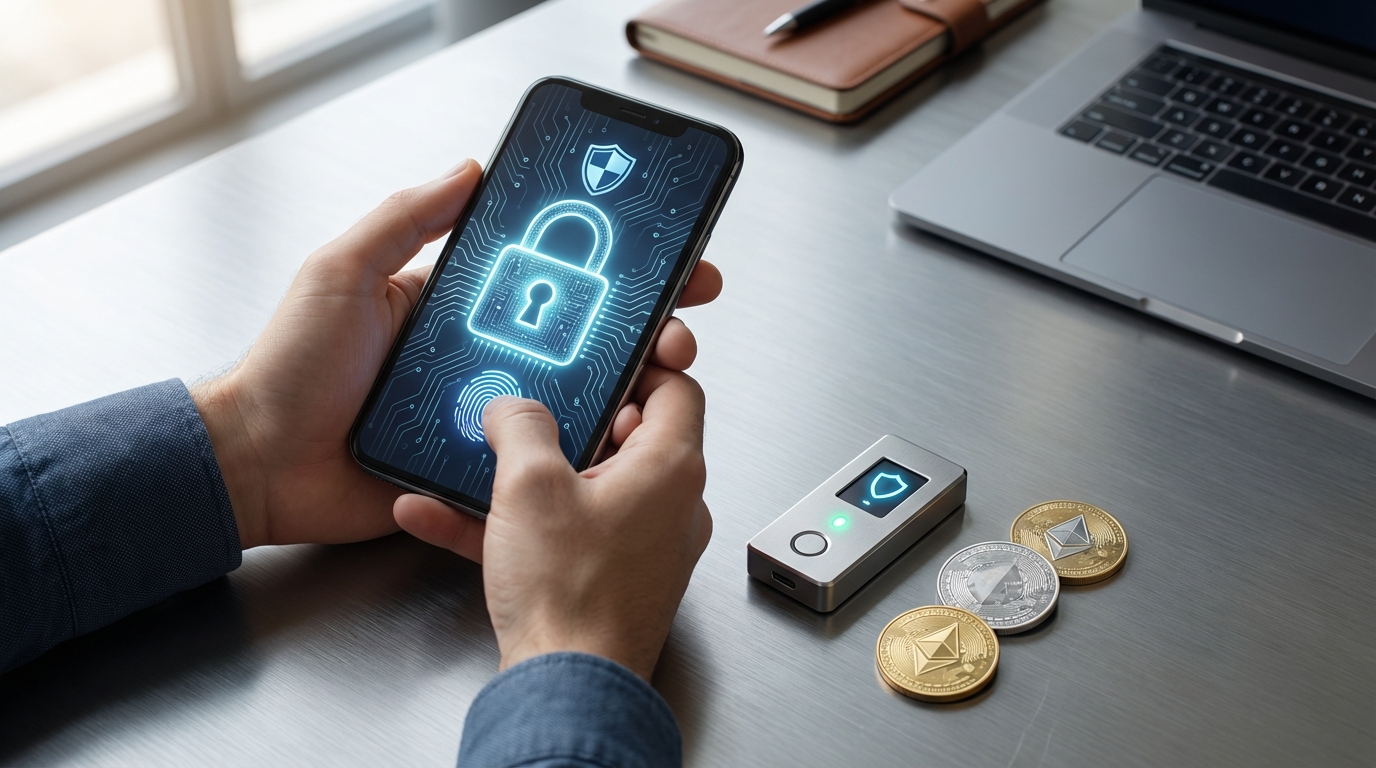
Your smartphone contains a fortress most people never think about. Buried in the silicon of modern mobile devices sits a dedicated chip designed to protect your most sensitive information from everything: hackers, malware, even a compromised operating system. This is the secure enclave, and when paired with a digital wallet, it transforms how we protect financial assets.
The secure enclave digital wallet benefits extend far beyond what traditional software wallets can offer. While hot wallets store your private keys in regular device memory, where they remain vulnerable to sophisticated attacks, hardware-backed solutions isolate cryptographic operations in a separate processor with its own encrypted memory. The difference matters enormously. Apple's Secure Element processes over $8.7 trillion in transactions annually through Apple Pay, and the security architecture behind that volume represents decades of cryptographic engineering.
For individuals managing cryptocurrency or digital credentials, and for institutions deploying payment solutions at scale, understanding this technology isn't optional anymore. The gap between software-based security and hardware isolation grows wider as attack methods become more sophisticated. What follows breaks down exactly how secure enclave wallets work, why they outperform alternatives, and where this technology heads next.
The Architecture of Secure Enclave Digital Wallets
The secure enclave represents a fundamentally different approach to protecting digital assets. Rather than relying on software barriers that can be bypassed through operating system vulnerabilities, this architecture creates physical separation between sensitive operations and the rest of your device.
Understanding Hardware-Level Encryption for Mobile Payments
Hardware-level encryption for mobile payments operates on a simple principle: cryptographic keys should never exist in memory that general-purpose software can access. The secure enclave maintains its own processor, its own encrypted memory, and its own secure boot process. When you authorize a payment, the enclave performs the cryptographic signing internally and outputs only the result.
This isolation means that even if malware gains complete control of your phone's main operating system, it cannot extract the private keys stored in the enclave. The keys literally never leave the protected hardware. Each transaction generates a unique cryptographic signature without exposing the underlying secret.
Modern implementations support multiple credential types within the same secure hardware. Payment cards, loyalty credentials, access badges, and digital IDs can all coexist in the enclave, each protected by the same hardware barriers. Financial institutions using platforms like PayCloud's TSM infrastructure can provision corporate payment cards directly into Apple Wallet, reducing deployment time while maintaining enterprise-grade security standards.
Isolating Private Keys from the Main Operating System
The main operating system on any smartphone represents an enormous attack surface. Millions of lines of code, thousands of third-party apps, and constant network connectivity create countless opportunities for exploitation. Traditional software wallets exist within this environment, protected only by software barriers that determined attackers routinely bypass.
Secure enclave isolation changes this equation entirely. The enclave runs its own minimal operating system, separate from iOS or Android. Communication between the main system and the enclave happens through a tightly controlled interface that permits specific operations without ever exposing raw key material.
When you initiate a cryptocurrency transaction, the wallet app sends the unsigned transaction data to the enclave. The enclave verifies your authentication, performs the signing operation internally, and returns only the signed transaction. An attacker who compromises your phone's operating system sees the signed output but never gains access to the private key that produced it. This architectural separation makes the difference between a wallet that can be drained remotely and one that requires physical possession of your device, plus successful biometric authentication.
Secure Enclave vs Software-Based Wallet Security
The security gap between hardware-backed and software-only solutions isn't theoretical. Real-world attacks demonstrate why this distinction matters for anyone holding significant digital assets.
Vulnerabilities of Hot Wallets and App-Level Storage
Hot wallets store private keys in the device's general memory or in encrypted files on the filesystem. Both approaches share a fundamental weakness: the decrypted keys must exist in accessible memory during signing operations. Malware designed to capture these moments can extract keys even from wallets that use strong encryption at rest.
Clipboard hijacking represents another persistent threat. Users copying wallet addresses or seed phrases expose that data to any app with clipboard access. Screen recording malware captures sensitive information displayed during wallet operations. Keyloggers record seed phrases during initial setup or recovery processes.
The Android ecosystem faces particular challenges due to its fragmented security model. Different manufacturers implement security features inconsistently, and older devices may lack hardware security modules entirely. Even on newer devices, apps running with elevated permissions can potentially access data that should remain protected.
Software wallets also suffer from update vulnerabilities. Each new version introduces potential bugs, and users who delay updates remain exposed to known vulnerabilities. The complexity of maintaining secure software across millions of device configurations creates an ongoing risk that hardware isolation largely eliminates.
Why Hardware Isolation Resists Malware and Exploits
Hardware isolation defeats most remote attack vectors because the secure enclave operates independently of potentially compromised software. Even a rootkit with complete control over the main operating system cannot instruct the enclave to reveal its secrets.
The enclave's minimal attack surface contributes significantly to its security. While a smartphone operating system contains tens of millions of lines of code, the enclave runs a stripped-down environment focused solely on cryptographic operations. Fewer lines of code mean fewer potential vulnerabilities.
Physical attack resistance adds another layer of protection. The enclave includes mechanisms that detect tampering attempts and can destroy key material if the device is physically compromised. While no security is absolute, these protections raise the cost and complexity of attacks dramatically.
Compliance requirements increasingly recognize this distinction. PCI-DSS requirements, PSD2 strong customer authentication mandates, and data residency rules are easier to satisfy with Secure Element storage than with server-side databases or software-only solutions. Organizations deploying digital payment infrastructure find that hardware-backed security simplifies regulatory compliance while reducing fraud exposure.
Enhancing Trust with Biometric Authentication Security
Biometric authentication security in crypto wallets transforms how users interact with their digital assets. The combination of hardware key storage and biometric verification creates security that feels effortless while remaining highly resistant to unauthorized access.
Integrating FaceID and TouchID with Cryptographic Signatures
Modern secure enclaves tie biometric authentication directly to cryptographic operations. When you authenticate with FaceID or TouchID, you're not just unlocking an app: you're authorizing the enclave to perform a specific signing operation. This binding between authentication and action prevents attacks that might try to replay previous authorizations.
The biometric data itself never leaves the secure enclave. Your fingerprint template or facial geometry exists only within the protected hardware, compared against new scans during each authentication attempt. Even if an attacker extracts data from your phone's main storage, they won't find usable biometric information.
Apple's implementation processes biometric matching entirely within the Secure Element, meaning the main processor never sees raw biometric data. This architecture ensures that compromised apps or operating system components cannot capture or replay biometric credentials. The result is authentication that combines convenience with security levels previously available only through dedicated hardware tokens.
Eliminating Password Fatigue Without Sacrificing Safety
Password fatigue drives poor security decisions. Users who must remember dozens of complex passwords inevitably reuse credentials, write them down insecurely, or choose weak passwords that attackers easily guess. Biometric authentication eliminates this friction while actually improving security.
A fingerprint or face scan takes less than a second and requires no memorization. Users authenticate willingly and frequently, enabling security measures that would be impractical with password-only systems. Transaction-level authentication becomes feasible when each verification requires only a glance at the screen.
The elimination of passwords also removes phishing vulnerabilities. Attackers cannot trick users into revealing biometric data the way they capture passwords through fake login pages. Social engineering attacks that rely on users typing credentials into malicious interfaces simply don't work against biometric systems.
For institutional deployments, biometric authentication reduces support costs associated with password resets and account lockouts. Employees accessing corporate payment systems authenticate reliably without help desk intervention, while maintaining audit trails that prove who authorized each transaction.
Preventing Unauthorized Access to Digital Assets
Protection against unauthorized access extends beyond software security to address physical theft, device tampering, and brute-force attacks. Secure enclave wallets incorporate multiple defensive layers that work together.
Mitigating Physical Theft and Device Tampering Risks
A stolen phone with a software wallet potentially means stolen funds. Secure enclave architecture changes this calculus significantly. Even with physical possession of the device, an attacker faces hardware barriers designed to resist extraction attempts.
The enclave's tamper detection mechanisms monitor for physical intrusion attempts. Abnormal voltage levels, temperature changes, or physical probing can trigger protective responses, including key destruction. Professional attackers with laboratory equipment face significant challengesin extracting data from modern secure elements.
Remote wipe capabilities provide additional protection. Users can erase enclave contents remotely, rendering stolen devices useless for accessing digital assets. Unlike software wallets, where backups might exist in cloud storage or other locations, enclave keys exist only in the hardware: wiping the enclave truly eliminates access.
Device binding ensures credentials cannot be moved to attacker-controlled hardware. Even if someone obtains your seed phrase, they cannot simply import your secure enclave wallet to their device. The hardware attestation that proves key operations occurred within genuine secure hardware prevents this type of credential theft.
Anti-Brute Force Mechanisms within the Secure Component
The secure enclave implements rate limiting and lockout policies that make brute-force attacks impractical. After several failed authentication attempts, the enclave introduces increasing delays between attempts. Continued failures can trigger temporary or permanent lockouts.
These protections operate within the enclave itself, beyond the reach of software manipulation. An attacker cannot bypass delays by modifying the operating system or wallet application. The hardware enforces timing restrictions regardless of what the software requests.
Some implementations incorporate escalating responses to repeated failures. Initial failures might trigger brief delays, while sustained attack attempts could require extended waiting periods or administrative intervention. The most aggressive policies can destroy key material after sufficient failures, prioritizing asset protection over recovery convenience.
For high-value deployments, multi-signature schemes add another barrier. Transactions require authorization from multiple secure enclaves, potentially across different devices or held by different parties. An attacker who compromises one device still cannot move funds without additional authorizations they don't control.
The Future of Mobile Asset Management and Institutional Adoption
The trajectory of secure enclave technology points toward broader adoption across financial services and beyond. Current adoption of digital credentials at 20% will grow to 70% by 2030 as regulatory frameworks mature and public trust builds.
Institutional adoption accelerates as the cost barriers to launching branded digital wallets drop dramatically. Community banks and regional credit unions can now compete with national players on mobile technology. Small financial institutions that partner with TSM providers can deploy enterprise-grade security and feature parity with major banks at a fraction of historical investment.
The convergence of payment credentials, identity documents, and access control within secure hardware creates opportunities for unified digital experiences. A single device can hold payment cards, employee badges, transit passes, hotel keys, and government-issued identification, all protected by the same hardware security. Government agencies already pilot digital driver's licenses and national IDs stored in the Secure Element.
Corporate adoption of digital credentials currently sits at 45% and will exceed 85% by 2030 as hybrid work models normalize and security requirements tighten. Enterprises replace physical employee badges with Secure Element credentials that unlock buildings, parking gates, and restricted areas.
For organizations looking to implement secure digital wallet solutions, the infrastructure now exists to deploy rapidly without building from scratch. Paycloud Innovations offers secure, scalable fintech solutions for payments, loyalty, and treasury management designed for businesses and financial institutions ready to move beyond legacy systems. Explore their platform to see how hardware-backed security can transform your digital payment strategy.
The secure enclave digital wallet benefits compound as adoption grows. Network effects from widespread acceptance, improving user familiarity with biometric authentication, and maturing regulatory frameworks all contribute to an environment where hardware-secured digital assets become the expectation rather than the exception. Organizations that establish their presence in this ecosystem now position themselves to capture value as the transition accelerates.



.svg)