


.svg)
.svg)
.svg)
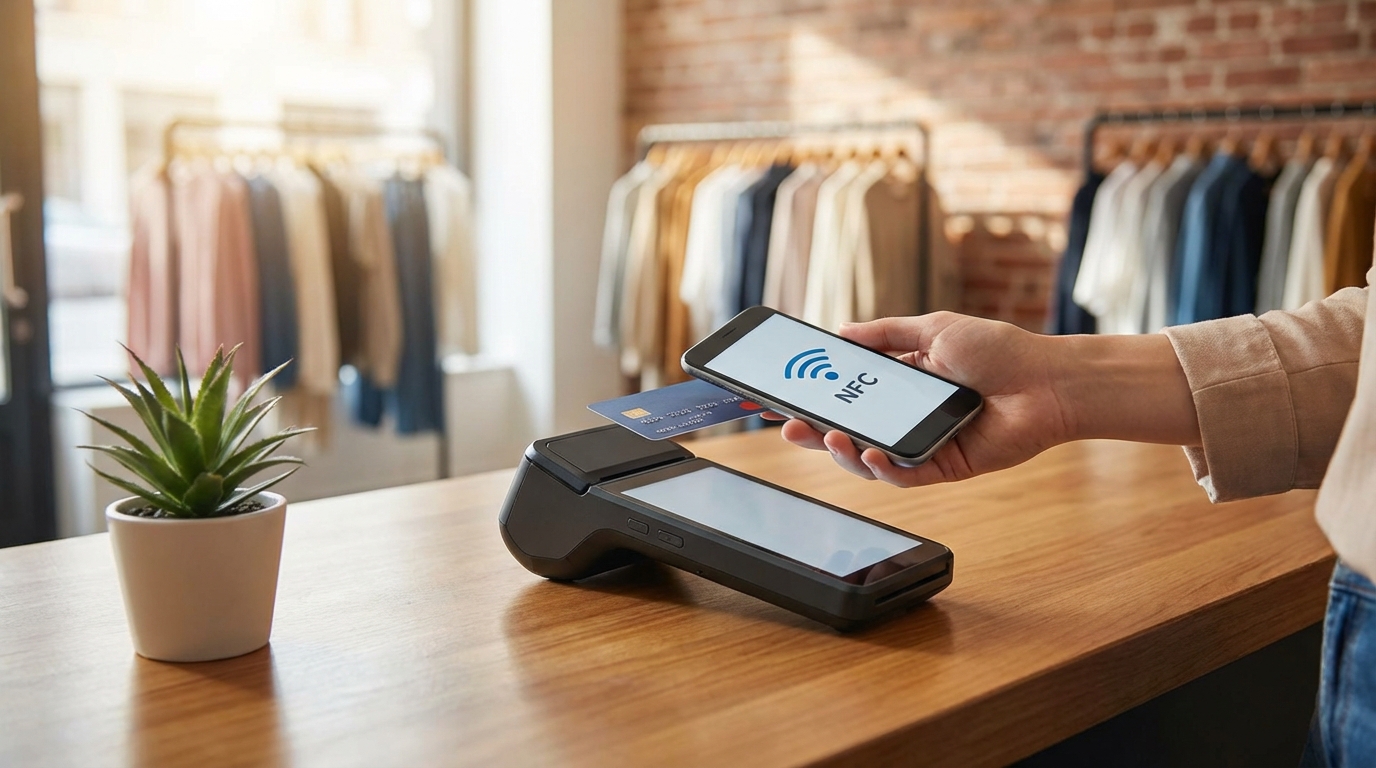
The Evolution of Contactless: Understanding the SoftPOS Shift
A coffee shop owner in Newport Beach recently told me something that stuck: "I spent $400 on a card reader that became obsolete before I finished paying it off." Her frustration echoes across thousands of small businesses watching payment technology evolve faster than their hardware budgets allow. The shift from NFC technology to actual revenue generation through SoftPOS terminals represents one of the most significant changes in retail payment infrastructure we've seen in decades.
Traditional point-of-sale systems demanded significant upfront investment. Merchants purchased dedicated terminals, paid for installation, signed maintenance contracts, and hoped the technology wouldn't become outdated within three years. SoftPOS changes this equation entirely by transforming smartphones and tablets into fully functional payment terminals. The hardware merchants already own becomes the payment acceptance device, eliminating the need for separate, expensive equipment.
This transformation isn't just about cost savings, though those matter enormously. SoftPOS creates flexibility that traditional systems simply cannot match. A retailer can accept payments anywhere their phone has connectivity. Pop-up shops, farmers markets, service calls, and delivery vehicles all become potential transaction points without additional hardware investment. Apple Pay alone processes $8.7 trillion in transactions annually, and 85% of U.S. retailers already accept it. The infrastructure exists; SoftPOS simply unlocks it for businesses previously priced out of the market.
The Transition from Hardware-Heavy to Software-Defined Payments
The payment industry spent decades building increasingly sophisticated hardware. Each generation of terminals added features: chip readers, contactless antennas, PIN pads, and receipt printers. This approach worked when hardware was the only option, but it created a replacement cycle that drained merchant resources.
Software-defined payments flip this model. Instead of embedding functionality in dedicated devices, SoftPOS solutions leverage the powerful processors, secure elements, and NFC capabilities already present in modern smartphones. The iPhone's Secure Enclave, for instance, provides hardware-level security that meets or exceeds traditional terminal standards. When combined with certified payment software, these devices become legitimate, secure payment acceptance tools.
The transition also accelerates update cycles. Hardware terminals require physical replacement or firmware updates that often demand technician visits. Software-based solutions update automatically, adding features and security patches without merchant intervention. A SoftPOS terminal running today can support payment methods that didn't exist when the merchant first downloaded the app.
Tap-to-Pay on iPhone vs Traditional POS Hardware
The comparison between tap-to-pay on iPhone and traditional POS hardware reveals stark differences in total cost, flexibility, and deployment speed. Traditional hardware requires purchase or lease agreements, typically ranging from $200 to $800 per terminal. Add installation, training, and ongoing maintenance, and first-year costs easily exceed $1,000 per location.
iPhone-based tap-to-pay eliminates most of these expenses. Merchants using existing devices pay only software licensing and transaction fees. Deployment happens in minutes rather than days. Training requirements drop significantly because staff already know how to use their phones.
Security comparisons favor neither option decisively. Traditional terminals meet established PCI standards through dedicated hardware. iPhone solutions leverage Apple's Secure Element technology, which financial institutions trust to store payment credentials for Apple Pay. Both approaches can achieve equivalent security levels when properly implemented. The difference lies in how that security gets delivered: through purpose-built hardware or through leveraging existing secure infrastructure.
Democratizing Payments in Micro-Retail and Pop-Up Markets
Small-scale retail has always faced a payment acceptance gap. The economics of traditional terminals simply didn't work for businesses with low transaction volumes or irregular sales patterns. A craft vendor selling at weekend markets couldn't justify $50 monthly terminal fees plus per-transaction costs when sales might total $300 in a good month.
SoftPOS eliminates this barrier entirely. Pay-per-use pricing models mean merchants incur costs only when they actually process transactions. No monthly minimums, no hardware depreciation, no maintenance contracts. A food truck operator can accept cards during a busy lunch rush and pay nothing during slow weeks.
Enabling Frictionless Checkout Experiences in Small-Scale Settings
Frictionless checkout experiences in micro-retail settings require technology that matches the informal nature of these businesses. Customers at farmers markets don't expect the same checkout process they'd encounter at a department store. They want quick, simple transactions that don't interrupt the personal interaction that draws them to small vendors.
SoftPOS delivers this simplicity. A vendor can tap a customer's card or phone against their device, complete the transaction, and send a digital receipt via text or email. No bulky terminal sits between merchant and customer. No receipt paper needs restocking. The technology becomes nearly invisible, preserving the personal connection that small retailers depend on.
This frictionless approach also reduces abandoned sales. Research consistently shows that cash-only vendors lose customers who don't carry physical currency. Younger demographics particularly expect card acceptance everywhere. When a customer can pay with their phone or card at any vendor, purchase decisions happen faster and more frequently.
Eliminating Barrier-to-Entry for Mobile Entrepreneurs
The barrier to entry for mobile entrepreneurs has historically included payment acceptance costs that could consume an entire month's profit. A new food truck operator, mobile pet groomer, or traveling artist faced a difficult choice: invest hundreds of dollars in payment hardware before earning any revenue, or lose sales from customers who don't carry cash.
SoftPOS solutions require minimal upfront investment. Many providers offer free app downloads with transaction-based pricing. A new entrepreneur can accept their first card payment within hours of deciding to start a business. This speed matters enormously for testing business concepts without significant financial risk.
The flexibility extends beyond initial setup. Mobile entrepreneurs often work multiple venues, events, or service areas. Traditional terminals required either multiple devices or constant transportation of a single unit. SoftPOS lives on the phone the entrepreneur already carries everywhere, ready to accept payment at any location with cellular or WiFi connectivity.
The Economics of SoftPOS: Reducing Merchant Acquiring Costs
Payment acceptance costs eat into margins more than most consumers realize. Traditional merchant services involve multiple fee layers: interchange fees paid to card-issuing banks, assessment fees paid to card networks, and processor markups that vary widely based on business size and negotiating power. Hardware costs add another layer that software-based solutions can reduce or eliminate.
Reducing merchant acquiring costs with software-based POS starts with eliminating hardware expenses but extends further. SoftPOS providers often operate with lower overhead than traditional payment processors, passing savings to merchants through competitive transaction rates. The absence of hardware inventory, deployment teams, and maintenance staff creates a fundamentally different cost structure.
Lowering Total Cost of Ownership through Software-Based POS
Total cost of ownership calculations for payment systems must include factors merchants often overlook. Hardware depreciation, software updates, PCI compliance validation, receipt supplies, connectivity costs, and employee training all contribute to what businesses actually spend on payment acceptance.
Software-based POS dramatically reduces most of these categories. Hardware depreciation disappears when merchants use existing devices. Software updates happen automatically at no additional cost. Receipt supplies become optional when digital receipts suffice. Training requirements shrink because the interface resembles apps employees already use daily.
The compliance picture also simplifies. Traditional terminals require regular security assessments and may need hardware replacement to meet evolving standards. SoftPOS solutions certified to PCI CPoC standards handle compliance at the software level, with updates deployed automatically when requirements change. Merchants benefit from enterprise-grade security without enterprise-grade complexity.
Scaling Payment Infrastructure without Capital Expenditure
Growing businesses face a persistent challenge: payment infrastructure that worked at one scale becomes inadequate at the next. A retailer opening a second location traditionally needed to replicate their entire payment hardware setup, doubling their equipment investment and ongoing costs.
SoftPOS enables scaling without proportional capital expenditure. Adding a new checkout station requires only another smartphone or tablet running the payment app. Opening a new location means downloading software rather than purchasing and installing terminals. Seasonal businesses can scale up for busy periods and scale down afterward without carrying unused hardware costs year-round.
This flexibility particularly benefits businesses with unpredictable growth patterns. A retailer testing a new market can deploy payment acceptance immediately, evaluate results, and expand or contract based on actual performance. The traditional model required betting on success before having data to support that bet.
Technical Integration: Turning Apps into Payment Terminals
The technical foundation of SoftPOS involves sophisticated integration between payment processing, device security features, and user interface design. Modern smartphones contain the essential components: NFC antennas for contactless communication, secure elements for cryptographic operations, and processors powerful enough to handle real-time transaction authorization.
Integrating NFC payment acceptance into existing mobile apps opens possibilities beyond standalone payment terminals. Retailers with existing mobile apps can add payment acceptance directly, creating unified experiences where customers browse inventory, check prices, and complete purchases within a single application.
Integrating NFC Payment Acceptance into Existing Mobile Apps
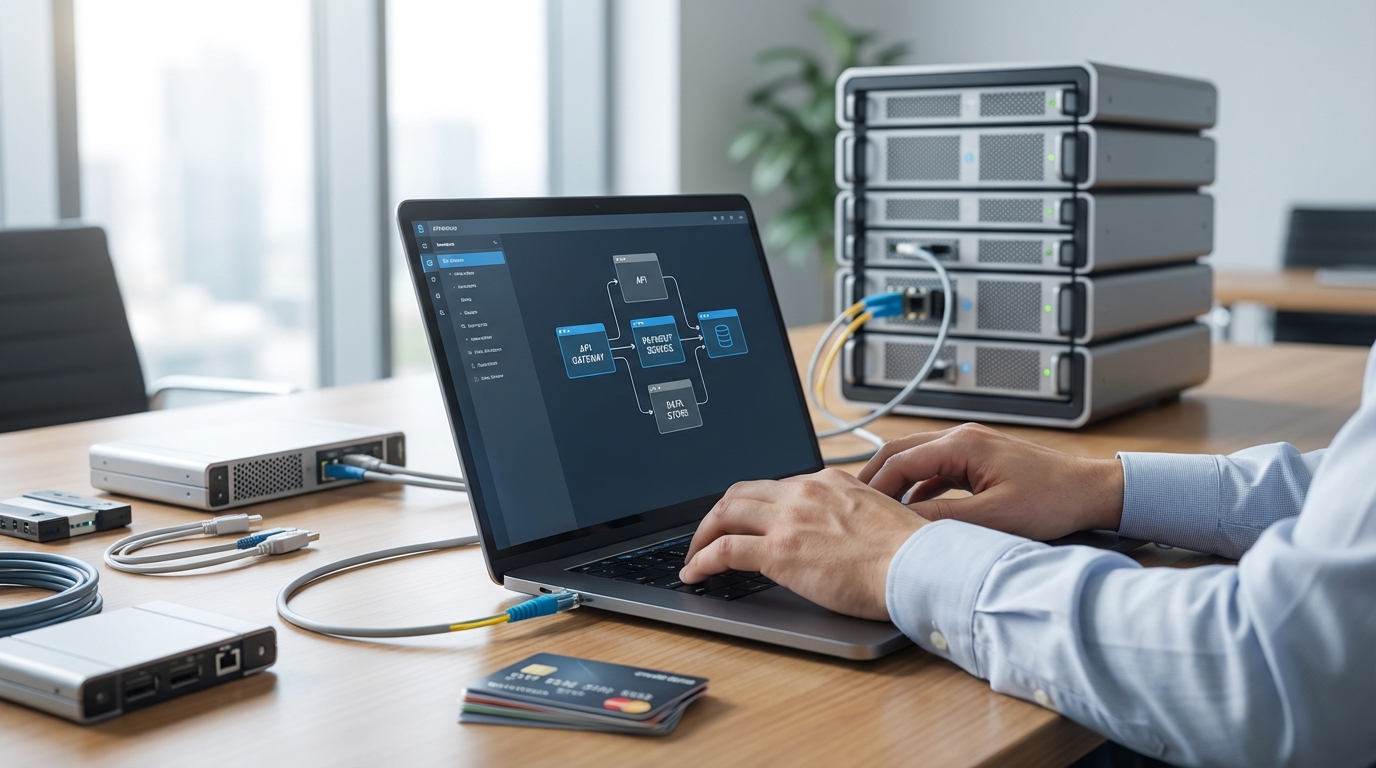
Adding NFC payment acceptance to existing mobile applications requires working with certified payment SDKs and following specific integration patterns. PayCloud's API-first approach allows developers to connect payment functionality directly to existing systems, including card management platforms, access control databases, and loyalty programs.
The integration process typically involves three components: the payment SDK that handles card reading and transaction processing, backend services that manage authorization and settlement, and user interface elements that guide customers and staff through transactions. Well-designed integrations make the payment step feel native to the app rather than a bolted-on addition.
Real-time provisioning ensures credentials activate within seconds of requests, enabling immediate payment acceptance after setup. This speed matters for businesses that need to deploy quickly or add payment capabilities to existing applications without lengthy development cycles.
Security Protocols and PCI CPoC Compliance Standards
Security concerns represent the most common objection to SoftPOS adoption. Merchants and customers reasonably wonder whether a phone can provide the same protection as a dedicated payment terminal. The answer lies in understanding how modern security architectures work.
PCI CPoC (Contactless Payments on Commercial Off-the-Shelf devices) standards define specific requirements for software-based payment acceptance. These standards address device integrity monitoring, secure transaction processing, and protection against tampering or malware. Certified solutions must demonstrate compliance through rigorous testing before deployment.
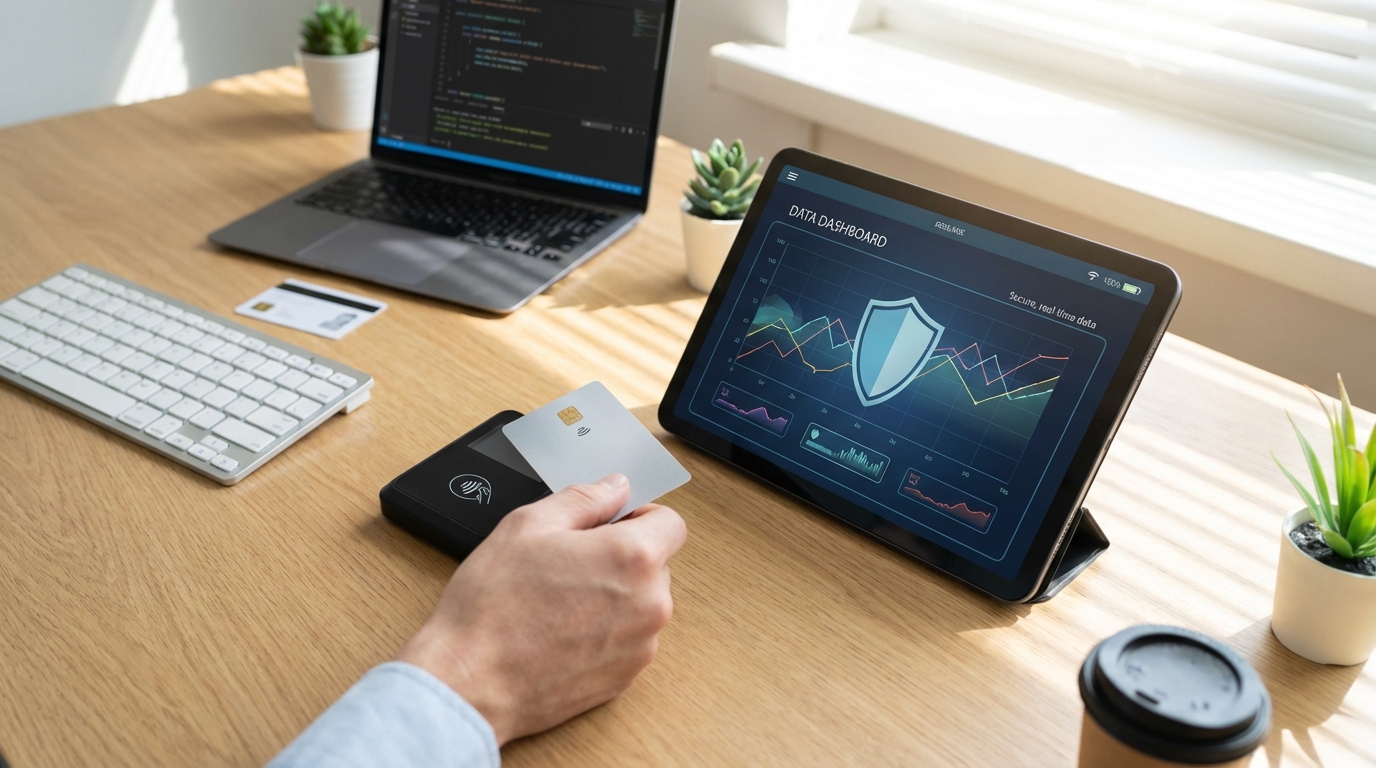
Apple's Secure Element technology provides hardware-level security that financial institutions already trust for Apple Pay transactions. The same infrastructure that protects consumer payment credentials can protect merchant acceptance capabilities. NFC and Secure Enclave backed infrastructure minimizes card-present fraud while ensuring regulatory adherence for card issuers and merchants alike.
Future-Proofing Retail with Unified Mobility and NFC
Payment acceptance represents just one application of the underlying NFC and secure element technologies. Forward-thinking retailers recognize that the same infrastructure supporting payments can enable loyalty programs, access control, inventory management, and customer identification. Building on a unified platform creates efficiency that siloed systems cannot match.
The Convergence of Inventory Management and Transaction Processing
The artificial separation between inventory systems and payment systems creates inefficiency that unified platforms can eliminate. Traditional retail required separate hardware and software for tracking inventory, processing sales, managing customer relationships, and handling payments. Each system generated its own data, often incompatible with the others.
Modern SoftPOS platforms increasingly integrate these functions. A single transaction can update inventory counts, apply loyalty rewards, record customer preferences, and process payment simultaneously. The data flows into unified analytics that provide insights impossible to generate from disconnected systems.
This convergence also enables new business models. Subscription services, buy-online-pickup-in-store, and mobile ordering all depend on tight integration between inventory and payment systems. Retailers building on unified platforms can implement these models without complex system integration projects.
Positioning Your Business for the SoftPOS Era
The transition from hardware-dependent payment systems to software-defined solutions represents a fundamental shift in how retailers think about transaction infrastructure. Cost savings matter, but the strategic advantages extend further: flexibility to adapt quickly, ability to scale without capital constraints, and access to unified data across previously siloed systems.
Merchants evaluating SoftPOS solutions should prioritize certified providers with established security credentials and proven integration capabilities. The technology works, but implementation quality varies significantly across vendors.
For businesses ready to explore how SoftPOS and modern payment infrastructure can transform their operations, Paycloud Innovations offers secure, scalable solutions designed for businesses of all sizes. Explore Paycloud's platform to see how software-defined payments could work for your specific needs.



.svg)