


.svg)
.svg)
.svg)
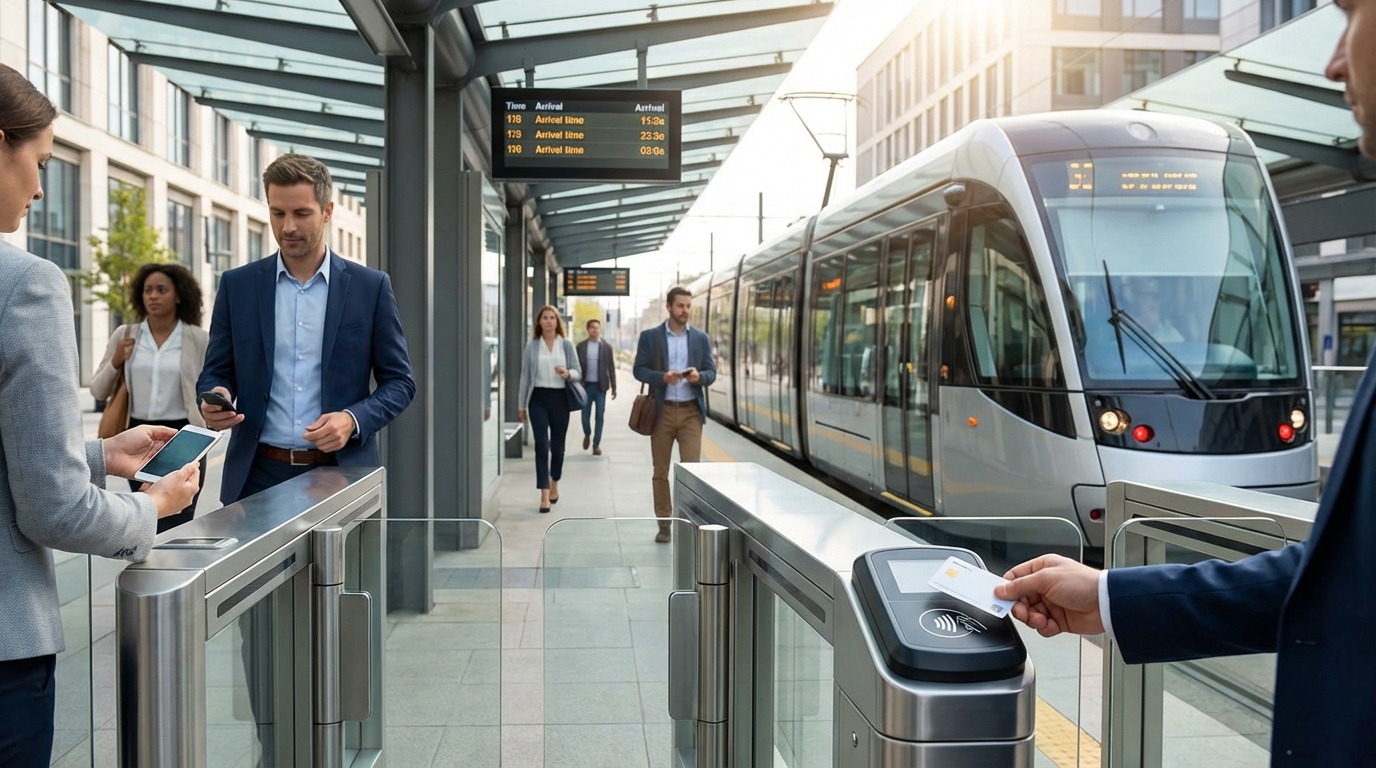
The Evolution of Fare Collection: From Tokens to Touchless
Picture this: a commuter fumbles through their bag searching for exact change while a line of frustrated passengers builds behind them. The bus driver waits, the schedule slips, and everyone loses time. This scene played out millions of times daily across transit systems worldwide for decades. But something remarkable has shifted in recent years.
Modern fare collection systems have fundamentally transformed how people pay for public transportation, creating ripple effects that benefit both transit agencies and the riders they serve. The old model of tokens, paper tickets, and exact-change fare boxes created friction at every boarding point. Cash handling alone consumed up to 15% of operating budgets at some agencies, between armored car services, counting facilities, and maintenance of mechanical fare boxes that jammed constantly.
The transformation happening across transit networks represents more than a technology upgrade. It's a complete rethinking of how public transportation can operate efficiently while actually improving the daily experience for millions of commuters. Systems that once required dedicated infrastructure at every station can now process payments through devices riders already carry in their pockets.
What makes this shift particularly compelling is the dual benefit: agencies reduce operational costs significantly while riders enjoy faster, more flexible payment options. This isn't a trade-off where one party wins at the other's expense. The math works for everyone, which explains why adoption has accelerated so dramatically.
The Limitations of Legacy Hardware
Traditional fare collection infrastructure carried staggering maintenance burdens. Mechanical fare boxes required regular servicing, with moving parts that wore out and jammed. Turnstiles needed constant calibration. Ticket vending machines represented capital investments of $50,000 to $150,000 per unit, plus ongoing maintenance contracts.
The real hidden cost was inflexibility. Want to change your fare structure? That meant reprogramming or replacing thousands of devices across your network. Agencies often kept outdated fare policies simply because updating the hardware was prohibitively expensive. A fare increase might require six months of preparation and significant capital outlay.
Cash-based systems also created security vulnerabilities. Fare boxes became targets for theft. Counting facilities required armored transport and secure processing. Every step in the cash handling chain added cost and risk that ultimately came from operating budgets.
Emergence of Account-Based Ticketing
The breakthrough came when agencies stopped thinking about tickets as physical objects and started treating them as data. Account-based ticketing shifts the intelligence from the fare media to the back-end system. Your payment method, whether a transit card, smartphone, or contactless bank card, simply identifies you. The system figures out what you owe based on your travel patterns.
This approach eliminates the need for complex fare calculations at the point of boarding. A simple tap confirms your identity, and the system handles everything else. Transfers, fare caps, discount eligibility: all calculated automatically after the fact. The rider doesn't need to understand the fare structure. They just travel.
San Diego MTS, Portland TriMet, and Chicago CTA have deployed these systems with documented improvements in both ridership and operational efficiency. The technology infrastructure that enables Apple Pay Express Transit has become a reference point for agencies considering modernization.
Operational Efficiency and Infrastructure Cost Savings
Transit agencies operate on thin margins. Every dollar saved on back-office operations can fund additional service hours or maintain aging infrastructure. Modern fare collection delivers savings across multiple categories simultaneously.
Reducing Physical Maintenance and Cash Handling
Cash handling costs typically run 8-15% of fare revenue for agencies still using traditional collection methods. Armored car pickups, counting facilities, bank fees, and shrinkage add up quickly. A mid-sized transit agency might spend $2-3 million annually just processing cash.
Contactless systems dramatically reduce these costs. When riders pay with bank cards or mobile wallets, the money flows directly through payment networks. No coins to count, no bills to sort, no armored cars to schedule. Some agencies have reported 70% reductions in cash handling costs within two years of launching open-loop payment options.
Physical card production adds another cost layer. Agencies typically spend $7-10 per card for production, mailing, and replacement. Universities managing campus transit have documented spending $300,000-500,000 annually on card replacement alone for student populations of 30,000-50,000. Digital credentials eliminate most of this expense.
Scalability Through Cloud-Based Architecture
Legacy fare systems required on-premises servers at every major facility. Upgrades meant site visits, hardware replacements, and extensive testing. Cloud-based architecture changes this equation entirely.
Modern platforms can scale capacity instantly during peak periods. A major event that doubles ridership doesn't require emergency hardware provisioning. The system simply allocates more processing resources temporarily. This elasticity was impossible with traditional infrastructure.
Software updates deploy simultaneously across the entire network. A fare policy change that once required months of hardware modifications can happen overnight. This agility lets agencies respond to ridership patterns, special events, or policy changes without the traditional infrastructure constraints.
Enhancing the Rider Journey Through Frictionless Payments
Cost savings matter for agency budgets, but rider experience determines whether people actually choose transit. The payment experience has historically been a friction point that discouraged casual riders and frustrated regulars alike.
Open Loop Systems and Mobile Wallets
Open-loop systems accept standard contactless payment cards and mobile wallets, meaning riders don't need transit-specific fare media. Visitors can use their existing bank cards. Residents don't need to maintain a separate transit account with its own balance to monitor.
The boarding process accelerates dramatically. A tap takes under half a second compared to several seconds for cash transactions or ticket validation. Multiply that difference by thousands of daily boardings, and you get measurable improvements in schedule adherence and passenger throughput.
Mobile wallet integration, particularly through platforms supporting Secure Element credentials, delivers the same frictionless experience as tap-to-pay for other purchases. Riders already comfortable paying for coffee with their phones find transit equally intuitive. The technology barrier disappears.
Automated Fare Capping and Equity
Fare capping represents one of the most rider-friendly innovations enabled by modern systems. Instead of requiring upfront purchase of daily or weekly passes, the system tracks your trips and automatically stops charging once you reach the pass equivalent.
This approach particularly benefits lower-income riders who may not have cash flow to purchase passes in advance. They pay per trip until they hit the cap, then ride free for the remainder of the period. The savings happen automatically without requiring financial planning or upfront investment.
The equity implications extend further. Unbanked populations can access prepaid options that work within the same system. Agencies can implement targeted fare programs for seniors, students, or low-income riders that apply automatically based on account status rather than requiring special fare media.
Data-Driven Decision Making for Transit Authorities
Every tap generates data. Modern fare collection systems transform this transaction stream into actionable intelligence that was simply unavailable with cash-based collection.
Real-Time Passenger Flow Analytics
Agencies can now see exactly how many riders board each vehicle at each stop, when they transfer, and where they exit. This visibility was impossible when riders paid cash and walked through turnstiles without individual tracking.
Real-time dashboards show crowding patterns as they develop. If a particular route experiences unusual demand, dispatchers can respond with additional service before platforms become dangerously crowded. This responsiveness improves safety and rider satisfaction simultaneously.
Historical analysis reveals patterns invisible to manual observation. Which stops see consistent overcrowding on specific days? Where do riders transfer most frequently? Which routes serve primarily commuters versus all-day travelers? Answers to these questions inform service planning decisions.
Optimizing Routes and Frequency Based on Demand
Data-driven scheduling replaces intuition-based planning. Agencies can match service levels to actual demand patterns rather than historical assumptions. Routes that show consistent overcrowding get additional frequency. Underperforming routes can be restructured based on actual origin-destination data.
The feedback loop accelerates improvement. Changes in service generate new ridership data that validates or challenges planning assumptions. Agencies can experiment with route modifications and measure results directly rather than waiting for periodic surveys.
This optimization extends to fare policy itself. Agencies can model the ridership impact of fare changes before implementation. Time-of-day pricing to spread peak demand becomes feasible when the system can automatically apply different rates based on boarding time.
Overcoming Implementation Barriers and Security Concerns
Modernization projects fail for predictable reasons. Understanding common obstacles helps agencies avoid them.
Integration with legacy systems presents the most frequent challenge. Most agencies can't replace everything simultaneously. New fare collection must work alongside existing infrastructure during transition periods. This requires careful planning and often custom integration work.
Security concerns around payment data require serious attention. PCI DSS compliance, strong customer authentication requirements, and data residency rules create complex requirements. However, Secure Element storage on mobile devices actually provides stronger protection than server-side databases or software-only solutions. The hardware-level security built into modern smartphones exceeds what most agencies could deploy independently.
Staff training and change management often receive insufficient attention. Frontline employees need to understand the new systems to assist confused riders. Customer service teams need updated procedures. Union considerations around job changes require proactive engagement.
Pilot programs reduce risk by validating technology and processes before full deployment. Reference implementations from agencies like San Diego MTS and Portland TriMet provide templates that reduce planning uncertainty. Typical timelines run 6-12 months from pilot to full deployment, including system integration and compatibility verification.
The Future of Integrated Urban Mobility
The trajectory points toward unified mobility platforms where transit, bike share, ride-hailing, and parking all connect through single payment accounts. Riders won't think about which agency operates which service. They'll simply travel, with the system handling payment allocation behind the scenes.
Integration with loyalty programs adds another dimension. Cross-brand reward networks can include transit alongside retail and hospitality, creating incentives that benefit riders and drive ridership simultaneously. Points earned from everyday purchases could offset transit costs, making public transportation more attractive.
The environmental benefits compound as adoption increases. Digital credentials eliminate tens of thousands of discarded plastic cards annually at larger agencies. Reduced cash handling means fewer armored vehicle trips. Better service optimization reduces empty vehicle miles.
For transit agencies evaluating modernization, the business case has never been stronger. Cost reductions fund service improvements. Better rider experience drives ridership growth. Data capabilities enable continuous optimization. The agencies that move decisively gain advantages that compound over time.
Paycloud Innovations specializes in the secure, scalable payment infrastructure that powers these transit transformations. Their solutions address the full spectrum from fare collection to loyalty integration, helping agencies modernize without building everything from scratch. Explore their transit solutions to see how modern fare collection can work for your network.




.svg)